
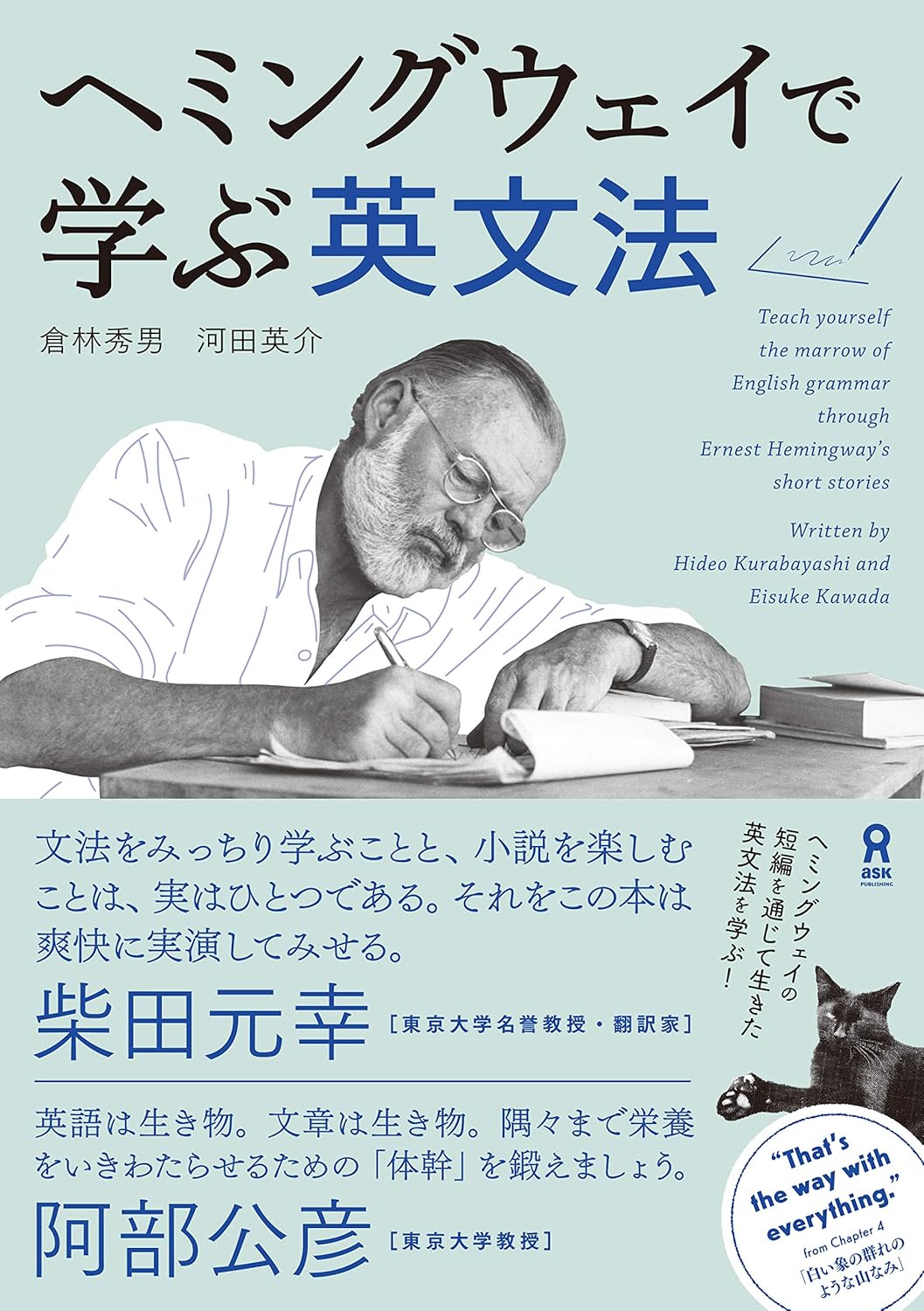
書籍: ヘミングウェイで学ぶ英文法
本文 未加工
HILLS LIKE WHITE ELEPHANTS by Ernest Hemingway
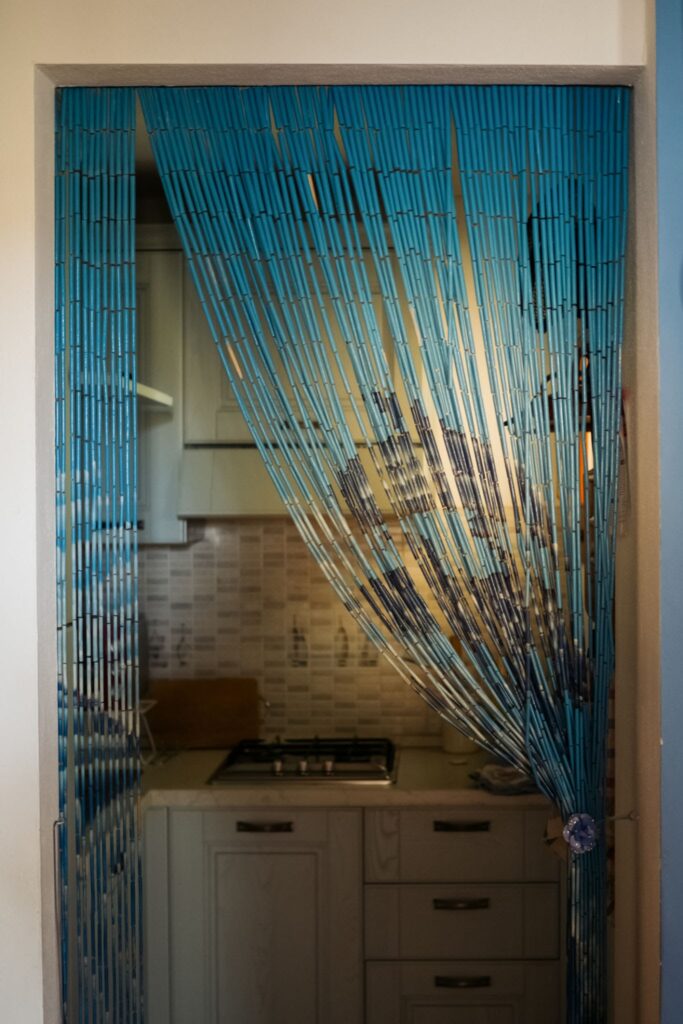
The hills across the valley of the Ebro* were long and white. On this side there was no shade and no trees and the station was between two lines of rails in the sun. Close against the side of the station there was the warm shadow of the building and a curtain, made of strings of bamboo beads, hung across the open door into the bar, to keep out flies. The American and the girl with him sat at a table in the shade, outside the building. It was very hot and the express from Barcelona would come in forty minutes. It stopped at this junction for two minutes and went on to Madrid.
“What should we drink?” the girl asked. She had taken off her hat and put it on the table.
“It’s pretty hot,” the man said.
“Let’s drink beer.”
“Dos cervezas,” the man said into the curtain.
“Big ones?” a woman asked from the doorway.
“Yes. Two big ones.”
The woman brought two glasses of beer and two felt pads. She put the felt pads and the beer glasses on the table and looked at the man and the girl. The girl was looking off at the line of hills. They were white in the sun and the country was brown and dry.
“They look like white elephants,” she said.
“I’ve never seen one,” the man drank his beer.
“No, you wouldn’t have.”
“I might have,” the man said. “Just because you say I wouldn’t have doesn’t prove anything.”
The girl looked at the bead curtain. “They’ve painted something on it,” she said. “What does it say?”
“Anis del Toro. It’s a drink.”
“Could we try it?”
The man called “Listen” through the curtain. The woman came out from the bar.
“Four reales.”
“We want two Anis del Toro.”
“With water?”
“Do you want it with water?”
“I don’t know,” the girl said. “Is it good with water?”
“It’s all right.”
“You want them with water?” asked the woman.
“Yes, with water.”
“It tastes like licorice,” the girl said and put the glass down.
“That’s the way with everything.”
“Yes,” said the girl. “Everything tastes of licorice. Especially all the things you’ve waited so long for, like absinthe.”
“Oh, cut it out.”
“You started it,” the girl said. “I was being amused. I was having a fine time.”
“Well, let’s try and have a fine time.”
“All right. I was trying. I said the mountains looked like white elephants. Wasn’t that bright?”
“That was bright.”
“I wanted to try this new drink. That’s all we do, isn’t it—look at things and try new drinks?”
“I guess so.”
The girl looked across at the hills.
“They’re lovely hills,” she said. “They don’t really look like white elephants. I just meant the coloring of their skin through the trees.”
“Should we have another drink?”
“All right.”
The warm wind blew the bead curtain against the table.
“The beer’s nice and cool,” the man said.
“It’s lovely,” the girl said.
“It’s really an awfully simple operation, Jig,” the man said. “It’s not really an operation at all.”
The girl looked at the ground the table legs rested on.
“I know you wouldn’t mind it, Jig. It’s really not anything. It’s just to let the air in.”
The girl did not say anything.
“I’ll go with you and I’ll stay with you all the time. They just let the air in and then it’s all perfectly natural.”
“Then what will we do afterward?”
“We’ll be fine afterward. Just like we were before.”
“What makes you think so?”
“That’s the only thing that bothers us. It’s the only thing that’s made us unhappy.”
The girl looked at the bead curtain, put her hand out and took hold of two of the strings of beads.
“And you think then we’ll be all right and be happy.”
“I know we will. You don’t have to be afraid. I’ve known lots of people that have done it.”
“So have I,” said the girl. “And afterward they were all so happy.”
“Well,” the man said, “if you don’t want to you don’t have to. I wouldn’t have you do it if you didn’t want to. But I know it’s perfectly simple.”
“And you really want to?”
“I think it’s the best thing to do. But I don’t want you to do it if you don’t really want to.”
“And if I do it you’ll be happy and things will be like they were and you’ll love me?”
“I love you now. You know I love you.”
“I know. But if I do it, then it will be nice again if I say things are like white elephants, and you’ll like it?”
“I’ll love it. I love it now but I just can’t think about it. You know how I get when I worry.”
“If I do it you won’t ever worry?”
“I won’t worry about that because it’s perfectly simple.”
“Then I’ll do it. Because I don’t care about me.”
“What do you mean?”
“I don’t care about me.”
“Well, I care about you.”
“Oh, yes. But I don’t care about me. And I’ll do it and then everything will be fine.”
“I don’t want you to do it if you feel that way.”
The girl stood up and walked to the end of the station.
Across, on the other side, were fields of grain and trees along the banks of the Ebro. Far away, beyond the river, were mountains. The shadow of a cloud moved across the field of grain and she saw the river through the trees.
“And we could have all this,” she said. “And we could have everything and every day we make it more impossible.”
“What did you say?”
“I said we could have everything.”
“We can have everything.”
“No, we can’t.”
“We can have the whole world.”
“No, we can’t.”
“We can go everywhere.”
“No, we can’t. It isn’t ours any more.”
“It’s ours.”
“No, it isn’t. And once they take it away, you never get it back.”
“But they haven’t taken it away.”
“We’ll wait and see.”
“Come on back in the shade,” he said. “You mustn’t feel that way.”
“I don’t feel any way,” the girl said. “I just know things.”
“I don’t want you to do anything that you don’t want to do—”
“Nor that isn’t good for me,” she said. “I know. Could we have another beer?”
“All right. But you’ve got to realize—”
“I realize,” the girl said. “Can’t we maybe stop talking?”
They sat down at the table and the girl looked across at the hills on the dry side of the valley and the man looked at her and at the table.
“You’ve got to realize,” he said, “that I don’t want you to do it if you don’t want to. I’m perfectly willing to go through with it if it means anything to you.”
“Doesn’t it mean anything to you? We could get along.”
“Of course it does. But I don’t want anybody but you. I don’t want any one else. And I know it’s perfectly simple.”
“Yes, you know it’s perfectly simple.”
“It’s all right for you to say that, but I do know it.”
“Would you do something for me now?”
“I’d do anything for you.”
“Would you please please please please please please please stop talking?”
He did not say anything but looked at the bags against the wall of the station. There were labels on them from all the hotels where they had spent nights.
“But I don’t want you to,” he said, “I don’t care anything about it.”
“I’ll scream,” the girl said.
The woman came out through the curtains with two glasses of beer and put them down on the damp felt pads. “The train comes in five minutes,” she said.
“What did she say?” asked the girl.
“That the train is coming in five minutes.”
The girl smiled brightly at the woman, to thank her.
“I’d better take the bags over to the other side of the station,” the man said. She smiled at him.
“All right. Then come back and we’ll finish the beer.”
He picked up the two heavy bags and carried them around the station to the other tracks. He looked up the tracks but could not see the train. Coming back, he walked through the barroom, where people waiting for the train were drinking. He drank an Anis at the bar and looked at the people. They were all waiting reasonably for the train. He went out through the bead curtain. She was sitting at the table and smiled at him.
“Do you feel better?” he asked.
“I feel fine,” she said. “There’s nothing wrong with me. I feel fine.”
本文 加工
※分秒は男性音声のものに対応
(1) 0:03
HILLS LIKE WHITE ELEPHANTS / by Ernest Hemingway
The hills / across the valley / of the Ebro / were long and white. On this side / there was no shade and no trees and the station was / between two lines / of rails / in the sun. Close against (~にピッタリと接して) the side / of the station / there was the warm shadow / of the building and a curtain, made of strings (紐、連なっているもの) / of bamboo beads (数珠玉) , hung / across the open door / into the bar, to keep out flies. The American and the girl / with him / sat at a table / in the shade, outside the building. It was very hot and the express / from Barcelona / would come / in forty minutes. It stopped / at this junction (分岐駅) / for two minutes and went on / to Madrid.
(2) 0:44
“What should we drink?” the girl asked. She had taken off her hat and put it / on the table.
“It’s pretty hot,” the man said.
“Let’s drink beer.”
“Dos cervezas, 「ビールを2本(2杯)ください」 ” the man said / into the curtain.
“Big ones?” a woman asked / from the doorway.
“Yes. Two big ones.”
The woman brought two glasses / of beer and two felt pads (フェルト製のコースター). She put the felt pads and the beer glasses / on the table and looked / at the man and the girl. The girl was looking off / at the line / of hills. They were white / in the sun and the country (その地域、一帯の土地) was brown and dry (茶色く乾燥した、不毛な).
(3) 1:19
“They look like white elephants,” she said. ※「予期せぬ妊娠(処置に困る高価で厄介なもの)」の隠喩
“I’ve never seen one,” the man drank his beer.
“No, you wouldn’t have (seen one).”
“I might have (seen one) ,” the man said. “Just because you say (that) / I wouldn’t have (seen one) /doesn’t prove anything.”
The girl looked / at the bead curtain. “They’ve painted something / on it,” she said. “What does it say?”
“Anis del Toro. It’s a drink.”

“Could we try it?”
The man called “Listen” / through the curtain. The woman came out / from the bar.
“Four reales /fɔːr reɪˈɑːlz/ 4レアル ※当時のスペインの通貨単位.”
“We want two Anis del Toro.”
“With water?”
“Do you want it / with water?”
“I don’t know,” the girl said. “Is it good / with water?”
“It’s all right (まあまあだよ、悪くはないよ) .”
“You want them / with water?” asked the woman.
“Yes, with water.”
(4) 2:02
“It tastes / like licorice /ˈlɪk.ər.ɪʃ/ (リコリス、甘草) ,” the girl said and put the glass down.
“That’s the way (道、方法) / with everything.” (何だってそんなものさ、世の中すべてそんな風にできている)
“Yes,” said the girl. “Everything tastes of (~の味がする) licorice. Especially all the things / you’ve waited so long for, like absinthe /ˈæb.sɪnθ/ (アブサン) .”
“Oh, cut it out (いい加減にしろ、よせよ) .”
“You started it,” the girl said. “I was being amused. I was having a fine time.”
“Well, let’s try and have a fine time.”
“All right. I was trying. I said (that) / the mountains looked like white elephants. Wasn’t that bright?“
“That was bright.”
“I wanted to try this new drink. That’s all we do, isn’t it—look at things and try new drinks?”
” I guess so (そう思うよ、たぶんね、そういうことなんだろう) .”
(5) 2:44
The girl looked across at the hills.
“They’re lovely hills,” she said. “They don’t really look like white elephants. I just meant the coloring of their skin through the trees.”
“Should we have another drink?”
“All right.”
The warm wind blew the bead curtain against the table.
“The beer’s nice and cool,” the man said.
“It’s lovely,” the girl said.
“It’s really an awfully simple operation, Jig,” the man said. “It’s not really an operation at all.”
The girl looked at the ground the table legs rested on.
“I know you wouldn’t mind it, Jig. It’s really not anything. It’s just to let the air in.”
The girl did not say anything.
(6) 3:29
“I’ll go with you and I’ll stay with you all the time. They just let the air in and then it’s all perfectly natural.”
“Then what will we do afterward?”
“We’ll be fine afterward. Just like we were before.”
“What makes you think so?”
“That’s the only thing that bothers us. It’s the only thing that’s made us unhappy.”
The girl looked at the bead curtain, put her hand out and took hold of two of the strings of beads.
“And you think then we’ll be all right and be happy.”
“I know we will. You don’t have to be afraid. I’ve known lots of people that have done it.”
“So have I,” said the girl. “And afterward they were all so happy.”
“Well,” the man said, “if you don’t want to you don’t have to. I wouldn’t have you do it if you didn’t want to. But I know it’s perfectly simple.”
(7) 4:15
“And you really want to?”
“I think it’s the best thing to do. But I don’t want you to do it if you don’t really want to.”
“And if I do it you’ll be happy and things will be like they were and you’ll love me?”
“I love you now. You know I love you.”
“I know. But if I do it, then it will be nice again if I say things are like white elephants, and you’ll like it?”
“I’ll love it. I love it now but I just can’t think about it. You know how I get when I worry.”
“If I do it you won’t ever worry?”
“I won’t worry about that because it’s perfectly simple.”
(8) 4:54
“Then I’ll do it. Because I don’t care about me.”
“What do you mean?”
“I don’t care about me.”
“Well, I care about you.”
“Oh, yes. But I don’t care about me. And I’ll do it and then everything will be fine.”
“I don’t want you to do it if you feel that way.”
The girl stood up and walked to the end of the station.
Across, on the other side, were fields of grain and trees along the banks of the Ebro. Far away, beyond the river, were mountains. The shadow of a cloud moved across the field of grain and she saw the river through the trees.
“And we could have all this,” she said. “And we could have everything and every day we make it more impossible.”
“What did you say?”
“I said we could have everything.”
“We can have everything.”
“No, we can’t.”
“We can have the whole world.”
“No, we can’t.”
“We can go everywhere.”
“No, we can’t. It isn’t ours any more.”
“It’s ours.”
“No, it isn’t. And once they take it away, you never get it back.”
“But they haven’t taken it away.”
“We’ll wait and see.”
“Come on back in the shade,” he said. “You mustn’t feel that way.”
“I don’t feel any way,” the girl said. “I just know things.”
“I don’t want you to do anything that you don’t want to do—”
“Nor that isn’t good for me,” she said. “I know. Could we have another beer?”
“All right. But you’ve got to realize—”
“I realize,” the girl said. “Can’t we maybe stop talking?”
They sat down at the table and the girl looked across at the hills on the dry side of the valley and the man looked at her and at the table.
“You’ve got to realize,” he said, “that I don’t want you to do it if you don’t want to. I’m perfectly willing to go through with it if it means anything to you.”
“Doesn’t it mean anything to you? We could get along.”
“Of course it does. But I don’t want anybody but you. I don’t want any one else. And I know it’s perfectly simple.”
“Yes, you know it’s perfectly simple.”
“It’s all right for you to say that, but I do know it.”
“Would you do something for me now?”
“I’d do anything for you.”
“Would you please please please please please please please stop talking?”
He did not say anything but looked at the bags against the wall of the station. There were labels on them from all the hotels where they had spent nights.
“But I don’t want you to,” he said, “I don’t care anything about it.”
“I’ll scream,” the girl said.
The woman came out through the curtains with two glasses of beer and put them down on the damp felt pads. “The train comes in five minutes,” she said.
“What did she say?” asked the girl.
“That the train is coming in five minutes.”
The girl smiled brightly at the woman, to thank her.
“I’d better take the bags over to the other side of the station,” the man said. She smiled at him.
“All right. Then come back and we’ll finish the beer.”
He picked up the two heavy bags and carried them around the station to the other tracks. He looked up the tracks but could not see the train. Coming back, he walked through the barroom, where people waiting for the train were drinking. He drank an Anis at the bar and looked at the people. They were all waiting reasonably for the train. He went out through the bead curtain. She was sitting at the table and smiled at him.
“Do you feel better?” he asked.
“I feel fine,” she said. “There’s nothing wrong with me. I feel fine.”
英単語・英語表現の解説
(1)
- Across the valley
- /əˈkrɔːs ðə ˈvæl.i/ : ə-KRƆS thə VAL-ee
- 谷の向こうに : On the other side of a low area of land between hills or mountains.
- 語源: across(十字を横切って)+ valley(ラテン語のvalles「谷」に由来)。
- 解説: 駅を挟んで広がる広大な風景を描写。後に語られる二人の未来の「選択肢」の広がりを暗示する空間的広がりを持ちます。
- 発音 of theコツ: acrossの語頭の /ə/ はごく弱く発音し、valleyの第1音節を最も強く際立たせます。
- No shade
- /noʊ ʃeɪd/ : NOU ʃeɪd
- 日陰が全くない : Complete absence of a cooler area out of direct sunlight.
- 語源: no + shade(古英語のsceadu「影、暗闇」に由来)。
- 解説: 駅の片側に広がる、遮るもののない不毛で乾燥した荒地を強調。二人の現在の状況や、中絶を選んだ場合の精神的な虚無感を象徴しています。
- 発音のコツ: noʊの二重母音をしっかり響かせ、shadeの /d/ は弾くように短く発音します。
- Lines of rails
- /laɪnz əv reɪlz/ : LAINZ əv REILZ
- 2本の線路 : The pairs of steel bars on which trains run.
- 語源: lines(ラテン語のlinea「糸、線」)+ rails(ラテン語のregula「直線的な棒」)。
- 解説: 駅が2本の路線の間に位置していることを示します。交わることのない並行線は、男女の意見の決定的な対立や、進むべき異なる運命の分岐点を象徴しています。
- 発音のコツ: linesの /z/ と of の /v/ をなめらかに繋げ、「ラインゾブ」のように一息に発音します。
- Close against
- /kloʊs əˈɡenst/ : KLOUS ə-GENST
- 〜にぴったりと接して、すぐ脇に : Very near or touching the side of something.
- 語源: close(ラテン語のclaudere「閉じる」)+ against(〜に向かって)。
- 解説: 強い日差しを避けるために、建物のすぐ脇の狭い日陰に身を寄せている様子を描写。二人が直面している問題の圧迫感や閉塞感を暗示しています。
- 発音のコツ: closeの語尾は濁らない /s/ です。againstの第2音節を最も強く発音します。
- Bamboo beads
- /bæmˈbuː biːdz/ : bæm-BOO BEEDZ
- 竹製のビーズ、竹の管 : Small pieces of bamboo strung together to make a curtain.
- 語源: bamboo(マレー語由来)+ beads(古英語のbeded「祈り、数珠玉」に由来)。
- 解説: バーの入り口に掛けられたカーテンの素材。外の世界と店内の境界線であり、風に揺れる頼りない遮蔽物として、二人の不安定な関係性を象徴しています。
- 発音のコツ: bambooの後半「ブー」を強く長く伸ばし、beedsの /z/ をしっかり響かせます。
- Keep out
- /kiːp aʊt/ : KEEP-OUT
- (中へ)入れないようにする、防ぐ : To prevent something from entering a place.
- 語源: keep(維持する)+ out(外へ)。
- 解説: ハエの侵入を防ぐという実用的な目的の熟語ですが、同時に自分たちの深刻な現実(中絶の話題)に外の世界を立ち入らせないようにしている二人の排他的な状況とも重なります。
- 発音のコツ: /p/ と /aʊ/ が連結し、「キーパウト」のように繋がって発音されます。
- Junction
- /ˈdʒʌŋk.ʃən/ : JUNK-shən
- 分岐駅、合流点 : A place where different railway lines meet or cross.
- 語源: ラテン語のjungere(結合する、繋ぐ)に由来。
- 解説: 単なる電車の乗り換え地点ではなく、人生の重大な決断(子供を産むか、中絶するか)を迫られている二人の運命の分岐点を物理的な場所として表現しています。
- 発音のコツ: 最初の /dʒʌ/ に強いアクセントを置き、後半の /ʃən/ は弱く曖昧に発音します。
(2)
- Taken off
- /ˈteɪ.kən ɒf/ : TAY-kən-OFF
- (帽子を)脱いだ、外した : Removed a piece of clothing or an item from one’s body.
- 語源: take(取る)+ off(離れて)。
- 解説: 帽子を脱いでテーブルに置く動作は、これから始まる重苦しい話し合いを前に、少女が身構えを解き、腰を据えようとしている心理状態を微細に表現しています。
- 発音のコツ: takenの語尾の /n/ と off が滑らかに連結し、「テイコンォフ」のように一息に発音します。
- Pretty hot
- /ˈprɪt.i hɒt/ : PRIT-y-HOT
- かなり暑い、相当に暑い : Considerably high in temperature.
- 語源: pretty(古英語の「知的な、ずる賢い」から「かなりの」へ変化)+ hot(古英語のhāt「熱い」)。
- 解説: 単なる気候の描写にとどまらず、二人の間に漂う緊張感や、直面している問題の「厄介さ・緊迫感」を間接的に象徴する重苦しい背景設定です。
- 発音のコツ: prettyの /t/ はフラップTになり、日本語のラ行に近い軽い音で処理されます。
- Into the curtain
- /ˈɪn.tuː ðə ˈkɜː.tən/ : IN-too-thuh-KER-tən
- カーテンに向かって、のれんの奥に向けて : In the direction of or toward the hanging screen.
- 語源: into(〜の中へ)+ curtain(ラテン語のcortina「囲い、幕」に由来)。
- 解説: 男が店の中にいる店員に対して、暖簾(カーテン)越しに直接顔を合わせることなく声をかけている場面です。男の他者への冷淡さや、顔を合わせないコミュニケーションの象徴とも言えます。
- 発音のコツ: curtainの /t/ の後は鼻に抜けるような音(声門破裂音)になり、「カートン」というよりは「カーゥン」のように発音されます。
- Felt pads
- /felt pædz/ : FELT-PADZ
- フェルト製のコースター : Small pieces of soft, thick cloth material placed under glasses to protect the table.
- 語源: felt(西ゲルマン語由来の不織布)+ pads(低地ドイツ語の「詰め物、クッション」に由来)。
- 解説: ビールグラスの結露を受け止めるためのコースター。ヘミングウェイの即物的な描写の一環であり、乾いた舞台に持ち込まれるわずかな「湿り気」を象徴しています。
- 発音のコツ: feltの /t/ は破裂させずに息を止め、padzの /z/ をしっかり濁らせて発音します。
- Looking off
- /ˈlʊk.ɪŋ ɒf/ : LOOK-iŋ-OFF
- (遠くを)視線をそらして見つめている : Directing one’s gaze away into the distance.
- 語源: look(見る)+ off(離れて)。
- 解説: 目の前にいる男から、そして二人の不穏な現実から視線をそらし、はるか遠くの山並みへと意識を逃避させている少女の心理的な距離感を表しています。
- 発音のコツ: lookingの語尾とoffが繋がり、「ルッキンゴフ」のように発音されます。
- Brown and dry
- /braʊn ənd draɪ/ : BROWN-ənd-DRAI
- 茶色く乾燥した、不毛な : Having a brown color and completely lacking moisture or life.
- 語源: brown(古英語のbrūn)+ dry(古英語のdrȳge)。
- 解説: 少女の視線の先にある、スペインのエブロ川流域の荒涼とした風景。生命力が失われた乾燥した大地は、中絶という選択によって失われるかもしれない「未来の可能性」を暗示しています。
- 発音のコツ: andは非常に弱く「アンド」の「ア」と「ド」を落とすように「ン」とだけ添え、二つの形容詞を際立たせます。
(3)
- White elephants
- /waɪt ˈel.ə.fənts/ : WAIT-el-ə-fənts
- 白い象、厄介な代物、無用の長物 : A possession that is useless or troublesome, especially one that is expensive to maintain.
- 語源: 昔、タイの国王が嫌いな家臣に「白い象(神聖で飼育費が莫大だが働かせられない)」を贈り、破産させたという故事に由来。
- 解説: タイトルの回収となる象徴的な表現。少女にとっては遠くの白い山並みが美しく奇妙な「白い象」に見えていますが、同時に二人が抱えている「予期せぬ妊娠(=処置に困る高価で厄介なもの)」の隠喩(メタファー)になっています。
- 発音のコツ: whiteの /t/ は破裂させずに息を止め、elephantsの最初の「エ」を最も強く発音します。
- Wouldn’t have
- /ˈwʊd.ənt hæv/ : WOOD-ənt-hav
- (これまでに)見たことがあるはずがない : Used to express a strong assumption that something did not happen in the past.
- 語源: would(意志・推量)+ not + have(完了の助動詞)。
- 解説: “I’ve never seen one(見たことがない)” と言った男に対し、少女が “No, you wouldn’t have.”(ええ、あなたには経験がないでしょうね)と返しています。男の想像力の欠如や、詩的な感性のなさを少し皮肉るような、二人の価値観のズレが浮き彫りになるセリフです。
- 発音のコツ: wouldn’tの /t/ はほとんど発音されず、「ウッドゥンハヴ」のように一気に縮めて発音します。
- Doesn’t prove anything
- /ˈdʌz.ənt pruːv ˈen.i.θɪŋ/ : DUZ-ənt-proov-EN-i-thiŋ
- 何の証明にもならない、だから何だというんだ : Does not show that something is true or correct.
- 語源: does + not + prove(ラテン語のprobare「試す、正しいと認める」)+ anything。
- 解説: 少女の皮肉に過剰に反応し、ムキになって反論する男の心の狭さや、会話の主導権を握ろうとする自己中心的な防衛本能が表れています。
- 発音のコツ: doesn’tの /t/ は舌を上顎につけたまま息を止め、proveの /v/ からanythingへ滑らかに繋げます。
- Anis del Toro
- /æˈniːs del ˈtɔː.roʊ/ : æ-NEES-del-TOR-oʊ
- アニス・デル・トロ(お酒の銘柄) : A specific brand of Spanish anise-flavored liqueur, meaning “Anise of the Bull.”
- 語源: スペイン語。「アニス(植物名)」+「〜の(del)」+「牡牛(toro)」。
- 解説: スペインの伝統的な強いリキュール。「牡牛(Toro)」は情熱や男性性の象徴であり、これから展開される男女の激しい心理的な駆け引きの舞台背景として機能しています。
- 発音のコツ: スペイン語由来の表現なので、Anisの「ニース」、Toroの「トーロ」にアクセントを置いて明瞭に発音します。
- Through the curtain
- /θruː ðə ˈkɜː.tən/ : throo-thuh-KER-tən
- カーテン越しに、のれんを通して : From one side of the hanging screen to the other.
- 語源: through(〜を通り抜けて)+ curtain。
- 解説: 男がバーの中にいる店員を呼ぶ際の描写。やはり直接顔を合わせようとせず、物理的な障壁(カーテン)を隔てたまま用件を済ませようとする男のコミュニケーションのあり方が再度示されています。
- 発音のコツ: throughの /θ/ は前歯で舌を軽く噛んで息を出し、curtainの後半は喉の奥で「ン」と落とすように発音します。
- Four reales
- /fɔːr reɪˈɑːlz/ : for-ray-ALZ
- 4レアル(当時のスペインの通貨単位) : A traditional unit of currency previously used in Spain.
- 語源: four + reales(ラテン語のregalis「王の、本物の」に由来)。
- 解説: 注文したお酒の代金を店員がぶっきらぼうに告げるセリフ。二人の間の緊迫したロマンチックとも言えない会話の合間に、冷徹で現実的な「日常の金銭取引」が挟み込まれるヘミングウェイ特有のリアリズムです。
- 発音のコツ: realesの第2音節「アールズ」にアクセントを置き、語末の /z/ をしっかり響かせます。
- It’s all right
- /ɪts ɔːl raɪt/ : its-awl-RAIT
- まあまあだよ、悪くはないよ : Adequate, acceptable, or permissible.
- 語源: it + is + all + right(正しい、適切な)。
- 解説: アニス酒を水割りで飲むのは美味しいかと尋ねる少女に対し、男が返す冷めた返事。何事に対しても熱量を持たず、どこか投げやりで「無難」に物事を処理しようとする男の態度がこの一言に凝縮されています。
- 発音のコツ: allの /l/ と rightの /r/ の違いを意識し、rightの /t/ は弾かずに鋭く息を止めます。
(4)
- Tastes like licorice
- /teɪsts laɪk ˈlɪk.ər.ɪʃ/ : TAYSTS-laik-LIK-ər-iʃ
- リコリス(甘草)のような味がする : Has a distinctive flavor resembling the sweet, bittersweet root of the licorice plant.
- 語源: taste(ラテン語のtastare「触る、味わう」)+ like + licorice(ギリシャ語のglukurrhiza「甘い根」に由来)。
- 解説: アニス酒の独特な風味を、ハーブのリコリス(薬草のような甘みと苦みがある)に例えています。少女にとって新しい体験(お酒)は、期待したほどの感動がなく、どこか薬臭く退屈なものであったという落胆を表現しています。
- 発音のコツ: tastesの /sts/ を明瞭に発音し、licoriceの最初の /lɪ/ に強いアクセントを置きます。
- That’s the way with everything
- /ðæts ðə weɪ wɪð ˈev.ri.θɪŋ/ : THATS-thə-wei-with-EV-ree-thiŋ
- 何だってそんなものさ、世の中すべてそんな風にできている : That is the typical nature or characteristic of all things in life.
- 語源: that + is + the + way(道、方法)+ with + everything。
- 解説: 少女の感想に対して男が投げやりに返す言葉。何に対してもシニカルで、新鮮な感動や期待をハナから諦めている男の冷めた人生観、そして二人の現在のマンネリ化した関係性がこの一言に表れています。
- 発音のコツ: that’s と way を強調し、with は短く弱く添えるように発音します。
- tastes of
- /teɪsts ʌv/ : teist-ov
- 〜の味がする、〜の風味がする : To have a particular flavor or a small amount of the flavor of something.
- 語源: taste(ラテン語のtastare「触る、味わう」)+ of(〜の、〜に関して)。
- 解説: 何かの味や成分がダイレクトに感じられるときに使われます。作中では、ずっと憧れていた「アブサン」を実際に口にした際、期待していた特別な感動がなく、ただの薬草(リコリス)の味しかしないという、理想と残酷な現実のギャップ、少女の失望感を象徴する表現となっています。
- 発音のコツ: tastesの /sts/ を発音したあと、of を「オヴ」ではなく「アヴ」のように弱く短く繋げて発音します。
- Waited so long for
- /ˈweɪ.tɪd soʊ lɒŋ fɔːr/ : WAY-tid-sou-lɔŋ-for
- あれほど長い間待ち望んでいた : Remained expectant or looked forward to something for a very extensive period of time.
- 語源: waited(古フランス語のwaiter「見張る、待つ」)+ so + long + for。
- 解説: ずっと憧れていた「アブサン(禁断の酒と呼ばれるリコリス風味の強い酒)」を例に出し、待ち望んだ未来や経験も、いざ手に入ってみれば「ただのリコリスの味(期待外れの現実)」にすぎないと、少女が強い皮肉と諦念を込めて語っています。
- 発音のコツ: waitedの過去形語尾 /tɪd/ をクリアに発音し、longを少し長めに引っ張ります。
- absinthe
- /ˈæb.sɪnθ/ : AB-sinth
- アブサン(ニガヨモギなどを主成分とする強いリキュール) : A potent green aniseed-flavored liqueur, originally distilled with wormwood and other herbs.
- 語源: ラテン語の absinthium(ニガヨモギ)に由来。
- 解説: 19世紀末のヨーロッパで芸術家たちを魅了した「禁断の酒」です。ニガヨモギやアニスに由来する独特の強い香りとリコリスに似た苦みがあり、アルコール度数が非常に高いのが特徴です。作中では、少女がずっと憧れ、待ち望んでいた「特別な大人の経験や未来」の象徴として登場しますが、いざ飲んでみるとただの退屈なリコリスの味しかせず、少女の深い落胆を引き立てる小道具となっています。
- 発音のコツ: 最初の /æb/ に最も強いアクセントを置き、語尾の /θ/ は前歯の間に軽く舌を挟んで息を吹き出すように発音します。
- Cut it out
- /kʌt ɪt aʊt/ : KUT-it-OUT
- いい加減にしろ、よせよ、やめてくれ : A phrasal verb used as a command to tell someone to stop doing or saying something annoying.
- 語源: cut(切る)+ it + out(外へ)。「(余計なものを)切り取る」から転じて、邪魔な言動を止めさせる意味に。
- 解説: 少女のトゲのある皮肉や、暗に二人の状況(中絶を控えた未来への絶望)を匂わせる会話に耐えかねて、男が不快感を露わにして話を遮ろうとする定番の口語表現です。
- 発音のコツ: リンキング(音の連結)により「カティタウト」のように一つの単語のように一息で発音します。
- Being amused
- /ˈbiː.ɪŋ əˈmjuːzd/ : BEE-iŋ-ə-MYOOZD
- 楽しんでいた、面白がっていた : Entertaining oneself or finding something funny and lighthearted.
- 語源: being + amused(フランス語のamuser「注意をそらす、楽しませる」に由来)。
- 解説: 進行形(was being)にすることで、「私は(あなたが不機嫌になる前は)純粋にその場の会話を楽しもうとしていた最中だったのに」という、男によって雰囲気を壊されたことへの不満を強調しています。
- 発音のコツ: amusedの /mjuː/ を最も強く発音し、語尾の /zd/ をしっかり濁らせます。
- Having a fine time
- /ˈhæv.ɪŋ ə faɪn taɪm/ : HAV-iŋ-ə-FAIN-TAIM
- 素晴らしい時間を過ごしている、楽しくやっている : Experiencing a very pleasant, enjoyable, or satisfactory period.
- 語源: having + a + fine(ラテン語のfinis「完成された、素晴らしい」)+ time。
- 解説: 異国の駅での退屈な待ち時間を、少女なりに健かに楽しもうとしていた(山を白い象に例えるなど)姿勢を示します。しかし、男の心の狭さのせいでそれが台無しになったという責め苦のニュアンスが含まれます。
- 発音のコツ: fine と time の両方の /aɪ/ の母音を響かせ、リズムよく繋げます。
- Wasn’t that bright?
- /ˈwɒz.ənt ðæt braɪt/ : WOZ-ənt-that-BRAIT
- 名案だったでしょう?、利口なセリフだったでしょう? : Wasn’t that a clever, witty, or intelligent remark?
- 語源: wasn’t + that + bright(古英語のbeorht「輝かしい、頭脳明晰な」)。
- 解説: 否定疑問文を使って、自分のユーモア(白い象の例え)を男に認めさせようとする、少し拗ねた、かつ攻撃的な少女の問いかけです。男から「そうだね、お利口だったよ」という同意を半ば強制的に引き出そうとしています。
- 発音のコツ: wasn’tの /t/ は破裂させずに止め、brightの /t/ を鋭く落とします。
- That’s all we do
- /ðæts ɔːl wi duː/ : THATS-awl-wee-DOO
- 私たちがやることと言えばそれだけ、それ以外に何もない : That is the single and entire extent of our actions or routine.
- 語源: that’s + all(すべてのこと)+ we + do。
- 解説: 二人のこれまでの関係性が、ただ観光地を巡り、景色を眺め、新しいお酒を試すだけの「中身のない、刹那的で表面的なもの」だったのではないかという、少女の深い虚無感と関係性への本質的な問い直しが込められた極めて重要なセリフです。
- 発音のコツ: all と do を強く発音し、二人の行動の限定性を強調するようにリズムを取ります。
- I guess so
- /aɪ ɡes soʊ/ : aɪ-ɡes-oh
- そう思うよ、たぶんね、そういうことなんだろう : Used to express reluctant or hesitant agreement with a statement.
- 語源: I + guess(推測する、思う)+ so(そのように)。
- 解説: 相手の痛烈な指摘や核心を突いた意見から目を背け、真正面から向き合うのを避けて適当に話を流そうとする、諦めや事なかれ主義が混じった消極的な同意表現です。
- 発音のコツ: guess をやや強めに発音し、so は息を抜くように軽く添えます。
(5)
- looked across at
- /lʊkt əˈkrɒs æt/ : lukt-ə-KROS-æt
- 〜の方を向いて向こう側を見る : To turn one’s gaze to look at something on the other side of a space.
- 語源: looked(古英語のlocian「見る」)+ across(交差して、向こう側へ)+ at。
- 解説: 駅の向こう側に広がる乾いた丘陵地帯へ少女が視線を投げる動作です。男との息苦しい会話から物理的・精神的に距離を置き、自分の内面や別の可能性に思いを馳せている様子を視覚的に表現しています。
- 発音のコツ: looked の語尾 /t/ と across の始点、across の語尾 /s/ と at を滑らかに繋げて「ルックタクロスァット」のように一息で発音します。
- coloring of their skin
- /ˈkʌl.ər.ɪŋ ʌv ðeər skɪn/ : KUL-ər-iŋ-ov-thair-skɪn
- それらの肌の色合い、皮膚の配色 : The particular color or shading of the outer surface of something.
- 語源: coloring(ラテン語のcolor「色」)+ of + skin(古ノルド語のskinn「皮」)。
- 解説: 前に自分が言った「白い象に見える」という表現を、男に否定されたため「木々の間から透けて見える丘の肌(表面)の色合いのことを言っただけ」と言い訳のように補足しています。男との感性のズレをこれ以上広げないための、少し引いた表現です。
- 発音のコツ: coloring の最初の /kʌ/ と skin の /skɪ/ を強調し、of や their は弱く素早く発音します。
- bead curtain
- /biːd ˈkɜː.tən/ : beed-KUR-tən
- ビーズのカーテン、数珠つなぎの暖簾 : A curtain made of hanging strings of beads, typically used to divide rooms.
- 語源: bead(古英語のbede「祈り、数珠」)+ curtain(ラテン語のcortina「囲い、幕」)。
- 解説: 駅の入り口に下がっているカーテン。このカーテンは、外界(開かれた可能性のある世界)と彼らのいる退屈な日陰のテーブルを隔てる象徴的な境界線です。風に揺れてテーブルに当たる描写が、外の現実の重みを二人に思い出させます。
- 発音のコツ: bead の語尾 /d/ を弾きすぎず、curtain の /kɜː/ に強いアクセントを置きます。
- nice and cool
- /naɪs ænd kuːl/ : nais-and-KOOL
- 冷たくて気持ちがいい、ちょうどよく冷えている : Very pleasantly cold and refreshing.
- 語源: nice(ラテン語のnescius「無知な」から転じて「繊細な、素敵な」)+ and + cool(古英語のcol「冷涼な」)。
- 解説: 「nice and + 形容詞」で「申し分なく〜だ」という口語表現です。男が核心(中絶の話)を避けるために、目の前にあるビールの冷たさという、どうでもいい表面的な話題に逃げ込んでいる様子が描かれています。
- 発音のコツ: nice と cool を強調し、and は弱化させて「ナイスァンクール」のように発音します。
- awfully simple
- /ˈɔː.fli ˈsɪm.pəl/ : AW-flee-SIM-pəl
- ものすごく簡単な、非常に単純な : Extremely uncomplicated or easy to deal with.
- 語源: awfully(awful「恐ろしい」から転じて、口語の強調「非常に」)+ simple(ラテン語のsimplex「一重の、単純な」)。
- 解説: awfully はここでは「とても、非常に」という強調の口語です。男が中絶手術のことを「酷く簡単な手術(処置)」と呼び、少女の不安を過小評価して、自分の都合の良い方向へ誘導しようとする身勝手さと軽薄さが滲み出ています。
- 発音のコツ: awfully の最初の /ɔː/ と simple の /sɪ/ をどちらもはっきりと発音します。
- not really an operation at all
- /nɒt ˈrɪə.li ən ˌɒp.ərˈeɪ.ʃən æt ɔːl/ : not-REE-ə-lee-ən-op-ər-EY-shən-æt-awl
- 本当の手術なんて言える代物ですらない、全く手術というほどのものではない : Definitely not a major medical procedure in any sense.
- 語源: not + really(実際の)+ an + operation(ラテン語のoperari「働く、処置する」)+ at all(全く)。
- 解説: 前文の「簡単な手術」という言葉すら否定し、「手術とすら呼べないものだ」とさらに言い換えることで、少女の心理的ハードルを必死に下げようとする男の執拗な説得工作(欺瞞)を表しています。
- 発音のコツ: operation のアクセント部分 /eɪ/ を最も高く強く発音し、最後の at all を「アトール」のように繋げます。
- wouldn’t mind it
- /ˈwʊd.ənt maɪnd ɪt/ : WOOD-ənt-maɪnd-it
- それを嫌がらない、気にするほどのことではない : Would not object to it or find it を or distressful.
- 語源: would + not + mind(古英語のgemynd「記憶、気にする」)+ it。
- 解説: 「君ならなんてことないよ」「嫌じゃないはずさ」と、少女の気持ちを男が勝手に代弁し、決めつけているセリフです。少女に選択権を与えているようでいて、精神的なプレッシャーをかけている心理的誘導が際立ちます。
- 発音のコツ: wouldn’t の /t/ はほとんど発音せず、mind ɪt を「マインディット」と連結させます。
- not anything
- /nɒt ˈen.i.θɪŋ/ : not-EN-ee-thiŋ
- 大したことではない、何でもない、ゼロに等しい : Of no重要性 or of no consequence whatsoever.
- 語源: not + anything(いかなるもの)。
- 解説: 手術に伴う危険や倫理的な苦痛、二人の関係性の決定的な変化といった重大な問題を、すべて「何でもないこと(nothing)」として片付けようとする男の冷酷な欺瞞がここに極まっています。
- 発音のコツ: anything の最初の /en/ にアクセントを置き、後半の /θɪŋ/ は息を抜くように発音します。
- to let the air in
- /tuː let ðiː eər ɪn/ : too-let-thee-air-in
- 空気を入れるため、風を通すため : To allow fresh air to enter a space.
- 語源: to + let(許す)+ the + air(ギリシャ語のaer「空気」)+ in。
- 解説: 当時の中絶手術(あるいは初期の処置)を男が比喩的・婉曲的に表現した言葉です。命を取り上げるという重い行為を、まるで「部屋の換気をするだけ」であるかのように言い換える男の言葉の軽さと恐ろしさが、この短編の白眉となっています。
- 発音のコツ: let, air, in のそれぞれの単語の繋がりを意識し、let the air in を流れるように一息で発音します。
(6)
- go with you
- /ɡoʊ wɪð juː/ : ɡou-with-yoo
- 君と一緒に行く、同行する : To accompany someone to a particular place or event.
- 語源: go(古英語のgan「歩く、去る」)+ with + you。
- 解説: 男が手術に付き添うことを約束する言葉です。一見すると優しく寄り添う頼もしい態度に見えますが、その本心は少女に中絶を確実に実行させるための監視であり、自分の望む結論へ早く誘導したいという利己的な意図が隠されています。
- 発音のコツ: go の母音をしっかり伸ばし、with you は「ウィジュー」のように滑らかに連結させます。
- stay with you all the time
- /steɪ wɪð juː ɔːl ðə taɪm/ : stei-with-yoo-awl-thə-taɪm
- ずっと君のそばにいる、終始付き添う : To remain by someone’s side continuously throughout an experience.
- 語源: stay(ラテン語のstare「立つ、とどまる」)+ with + you + all + the + time。
- 解説: 「ずっとそばにいるから」という甘い言葉を重ねることで、手術に対する少女の恐怖心を和らげようとしています。しかし、少女が本当に求めている「新しい命を共に育む覚悟」からは完全に目を背けた、表面的な気休めにすぎません。
- 発音のコツ: stay と all を強調し、with you は弱く流れるように繋げます。
- perfectly natural
- /ˈpɜː.fəkt.li ˈnætʃ.ər.əl/ : PUR-fəkt-lee-NATCH-ər-əl
- 完全に自然なこと、まったく当たり前のこと : Completely normal, instinctive, or in accordance with nature.
- 語源: perfectly(ラテン語のperficere「完成させる」)+ natural(ラテン語のnatura「誕生、自然」)。
- 解説: 人為的に妊娠を中断させるという不自然な行為を、男は「(処置の後は)すべてが完全に自然な状態に戻るだけだ」と言いくるめています。罪悪感や肉体的・精神的な痛みを「なかったこと」にできると信じ込もうとする、男の浅はかな合理主義が表れています。
- 発音のコツ: perfectly の /pɜː/ と natural の /næ/ をそれぞれ高く強く発音します。
- Just like we were before
- /dʒʌst laɪk wi wɜːr bɪˈfɔːr/ : jʌst-laik-wee-wur-bɪ-FOR
- 以前の私たちとまったく同じように : Exactly in the same manner or state as we used to be in the past.
- 語源: just + like + we + were + before(〜の前に)。
- 解説: 手術さえ終われば、二人の関係は元の気楽な旅行生活(ただ景色を見て新しい酒を試すだけの関係)に戻れるという男の楽観的な幻想です。一度宿った命や、この決断を通して生じた二人の決定的な亀裂は、二度と「前と同じ」には戻らないという現実に男は気づいていません。
- 発音のコツ: just と before を強調し、like we were は一息で素早く発音します。
- bothers us
- /ˈbɒð.əz ʌs/ : BOTH-əz-ʌs
- 私たちを悩ませる、私たちの邪魔をする : To cause us worry, anxiety, or trouble.
- 語源: bother(低地ドイツ語やアイルランド語の「騒ぎ、悩ませる」に由来か)+ us。
- 解説: 男にとって、お腹の子どもは「自分たちの自由で楽しい生活を邪魔するだけの邪魔者(トラブルの原因)」にすぎないという本音がこの言葉に凝縮されています。問題の本質を「子ども」という外的要因にすり替え、自分たちの関係性の脆弱さから目を背けています。
- 発音のコツ: bothers の /ð/ の濁音を意識し、語尾の /z/ と us を繋げて「ボザーズァス」のように発音します。
- took hold of
- /tʊk hoʊld ʌv/ : tuk-hould-ov
- 〜を掴む、〜を握る : To grasp or internalize something with one’s hand.
- 語源: took(古英語のtacan「触る、掴む」)+ hold(掴むこと)+ of。
- 解説: 少女がビーズのカーテンの紐を2、3本掴む動作です。男の身勝手な言葉の羅列に耐えかねて、何か具体的なものに触れることで自分の感情を必死にコントロールしようとしたり、外の世界へ飛び出したいという抑圧された衝動を物理的な行動で示しています。
- 発音のコツ: took の語尾 /k/ を少し残しつつ、hold of を「ホールドヴ」と連結させます。
- So have I
- /soʊ hæv aɪ/ : sou-hav-aɪ
- 私もそうだよ、私も同じ経験がある : An expression used to agree that the speaker has also done or experienced the same thing.
- 語源: so + have + I。
- 解説: 男の「中絶をした知り合いをたくさん知っている(だから大したことない)」という言葉に対し、少女が「私も知っているわ」と返すシーンです。少女はこの後に強烈な皮肉を込めており、男の「みんなやってるから大丈夫」という安易な慰めを突っぱねています。
- 発音のコツ: I を一番強く、かつ余韻を持たせるように発音し、少女の複雑な感情を表現します。
- if you don’t want to
- /ɪf juː doʊnt wɒnt tuː/ : if-yoo-dount-wont-too
- もし君がしたくないのなら : If it is against your wishes or preferences to do something.
- 語源: if + you + don’t + want(欲する)+ to。
- 解説: 話が平行線をたどる中、男が「君が嫌ならしなくていいんだよ」と一歩引いて見せるセリフです。しかし、これは本当に少女の意思を尊重しているのではなく、「僕は無理強いしていない」という自らの免罪符(責任逃れ)を作るための、卑怯な譲歩にすぎません。
- 発音のコツ: want to は口語で「ウォナ」のように縮まることが多いですが、ここでは to を軽く落とすように発音します。
- I wouldn’t have you do it
- /aɪ ˈwʊd.ənt hæv juː duː ɪt/ : aɪ-WOOD-ənt-hav-yoo-doo-it
- 君にそんなことをさせたくはない、無理にさせようとは思わない : I would not force or cause you to perform that action against your will.
- 語源: I + wouldn’t + have(使役「〜させる」)+ you + do + it。
- 解説: 使役の have(have + 人 + 動詞の原形)を用いた「君にそれをさせたくない」という表現です。優しい恋人のポーズをとりながらも、会話全体で「中絶がいかに簡単か」を執拗にアピールし続けているため、この言葉はかえって男の偽善性を際立たせています。
- 発音のコツ: wouldn’t の否定のニュアンスを強調し、have you do it は一連の流れでスムーズに発音します。
(7)
- the best thing to do
- /ðə best θɪŋ tuː duː/ : thə-best-thiŋ-too-DOO
- すべき最善のこと、一番良い方法 : The most advantageous, appropriate, or sensible course of action available.
- 語源: the + best(古英語のbetst「最高の」)+ thing + to + do。
- 解説: 男が中絶手術を「それが僕たちにとって最高の選択肢だ」と言い切る場面です。自分の都合(自由な旅行生活の維持)を「二人のための最善策」として一般化し、合理化しようとする男のエゴイズムが端的に表れています。
- 発音のコツ: best と do を強調し、thing to は一息に滑らかに繋げて発音します。
- things will be like they were
- /θɪŋz wɪl biː laɪk ðeɪ wɜːr/ : thiŋz-wɪl-bee-laik-thei-wur
- 状況は以前のようになる、元の二人に戻る : Circumstances or relationships will return to their previous state.
- 語源: things + will + be + like + they + were。
- 解説: 少女が男に対して「(手術をすれば)本当に前みたいに戻れるの?」と、不安と不信感を滲ませながら確認しているセリフです。男の「元通りになる」という甘い見通しに対して、少女がその欺瞞性を心のどこかで見抜いていることが伺えます。
- 発音のコツ: things と were をやや強調し、間の will be like they はサラリと流すように発音します。
- I love you now
- /aɪ lʌv juː naʊ/ : aɪ-lʌv-yoo-NAU
- 今だって愛しているよ : I hold deep affection for you at this present moment.
- 語源: I + love(古英語のlufian「愛する」)+ you + now。
- 解説: 「手術をしたら愛してくれる?」という少女の切実な問いに対する男の返答です。「将来の愛」を保証することを避け、「今だって愛している(だから僕の言うことを信じて手術してくれ)」と論点をすり替える、男のずる賢い自己防衛が透けて見えます。
- 発音のコツ: now を最も強く発音し、現在の愛を強調するニュアンスを出します。
- will be nice again
- /wɪl biː naɪs əˈɡen/ : wɪl-bee-nais-ə-GEN
- また素敵になる、再び楽しくなる : Will become pleasant, enjoyable, or satisfactory once more.
- 語源: will + be + nice + again(再び)。
- 解説: 少女が「手術をすれば、また元の楽しい関係に戻れるのね」と皮肉混じりに、あるいは自分を納得させるように呟く場面です。二人の関係がすでに修復不可能なほど冷え切っていることを、少女自身が痛感している悲痛さが込められています。
- 発音のコツ: nice と again の後半 /ɡen/ をハッキリと発音します。
- just can’t think about it
- /dʒʌst kɑːnt θɪŋk əˈbaʊt ɪt/ : jʌst-kahnt-thiŋk-ə-BAUT-it
- どうしてもそのことについて考えられない、直視できない : Simply unable to focus or dwell on a particular matter due to stress.
- 語源: just + can’t + think(古英語のþencan「考える」)+ about + it。
- 解説: 男が「今はその(子どもの)ことについて考える余裕がない」と言い訳をするシーンです。目の前の重大な現実(妊娠)から目を背け、自分のキャパシティの狭さを「心配性な性格」のせいにして正当化しようとしています。
- 発音のコツ: can’t の否定の音をしっかり残し、think about it を「ティンカバウティット」のように繋げます。
- how I get when I worry
- /haʊ aɪ ɡet wen aɪ ˈwʌr.i/ : hau-aɪ-get-wen-aɪ-WUR-ee
- 心配事があるときの僕の状態、僕が焦っているときの様子 : The typical state of anxiety or irritation I fall into when I am anxious.
- 語源: how + I + get(状態になる)+ when + I + worry(古英語のwyrgan「首を絞める、苦しめる」)。
- 解説: 男が「僕が心配し始めるとどうなるか、君も知っているだろう」と、自分の不機嫌さや余裕のなさを少女に認めさせ、これ以上自分を責めないよう暗に要求している、非常に自己中心的な表現です。
- 発音のコツ: worry の最初の /wʌ/ に強いアクセントを置き、焦燥感を表現するように発音します。
- won’t ever worry
- /woʊnt ˈev.ər ˈwʌr.i/ : wont-EV-ər-WUR-ee
- 二度と心配しない、もう決して思い悩まない : Will never experience anxiety or distress about a matter again.
- 語源: won’t(will not)+ ever + worry。
- 解説: 少女が「もし私が手術をしたら、あなたはもう一生そのことで悩まないのね?」と、念を押すように(あるいは男の浅はかさを試すように)問いかけています。男の「心配」を解消するためだけに、自分の身体を犠牲にすることへの割り切れなさが滲んでいます。
- 発音のコツ: won’t の /oʊ/ をしっかり閉じ、ever と worry の頭をそれぞれ鋭く発音します。