
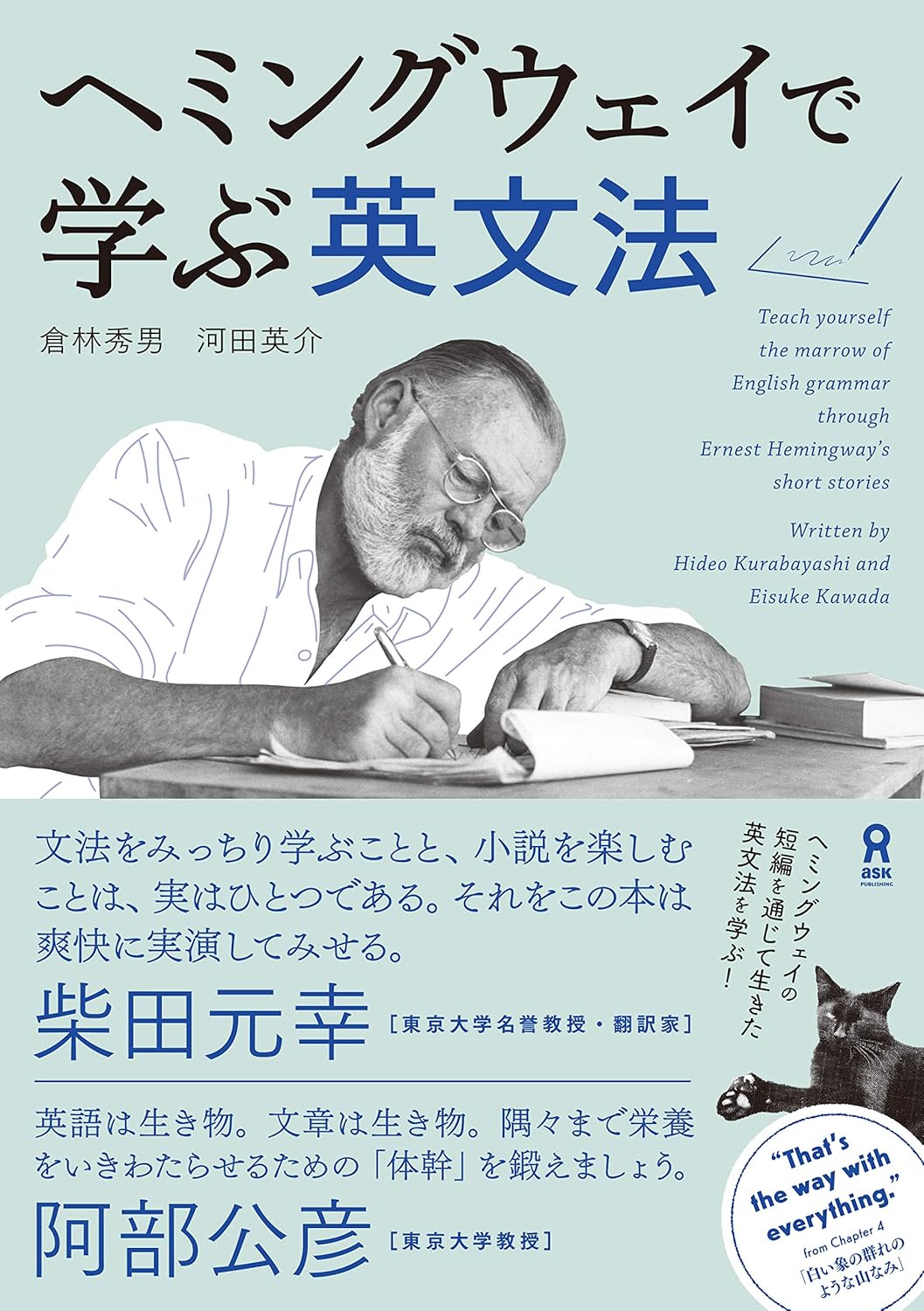
書籍: ヘミングウェイで学ぶ英文法
ヘミングウェイの文体革命:「アイスバーグ理論」と「簡潔な反復」を読み解く
アーネスト・ヘミングウェイの文章を読んでいると、言葉は非常にシンプルなのに、不思議な緊張感や奥行きを感じたことはありませんか?それは、彼が新聞記者時代に培い、文学界に革命を起こした独自のスタイルがあるからです。
ヘミングウェイの文体を知る上で欠かせない2つのキーワード、「アイスバーグ理論」と「簡潔な反復」について分かりやすく解説します。
1. アイスバーグ理論(氷山の一角)
ヘミングウェイは、自身のスタイルを「氷山(Iceberg)」に例えました。
水面下に隠された7/8
氷山は海の上に見えている部分はわずか1/8で、残りの7/8は水面下に沈んでいます。文学も同様に、「書かれた言葉」は氷山の一角に過ぎず、語られない背景や感情こそが物語の真実であるべきだという理論です。
- 感情を説明しない(Show, Don’t Tell)「彼は悲しかった」と説明するのではなく、ただ「彼がじっと一点を見つめていた」という客観的な動作だけを描写します。
- 読者の想像力に委ねる書き手が真実を熟知していれば、あえて書かないことで、かえって読者はその「沈黙」から深い意味を汲み取ることができます。
作品での例:『身を処する(A Day’s Wait)』
少年がなぜベッドの足元を奇妙に見つめ続けているのか、その理由は終盤まで明かされません。しかし、その「説明の欠如」が、少年の内面にある死への恐怖をより巨大なものとして際立たせています。
2. 簡潔な反復(Concise Repetition)
ヘミングウェイは装飾的な形容詞や複雑な構文を嫌い、単純な言葉をあえて繰り返す手法をとりました。
リズムと心理描写
特定の単語やフレーズを繰り返すことで、独特の呪術的なリズムが生まれます。これは、登場人物の「強迫観念」や「逃れられない状況」を表現するのに非常に効果的です。
- 「and」による接続「〜だから」「〜にも関わらず」といった論理的な接続詞を避け、単純な事実を
andで繋いでいきます。これにより、時間は淡々と、しかし残酷なほど確実に流れている感覚を与えます。 - 執拗な繰り返し同じ言葉を重ねることで、読者の意識をその一点に固定させます。
作品での例:『雨の中の猫(Cat in the Rain)』
“Anyway, I want a cat,” she said, “I want a cat. I want a cat now.”
「猫」という言葉を3回繰り返すことで、女性が抱える空虚さと、それをごまかそうとする執着心が見事に表現されています。
まとめ:なぜヘミングウェイは「書かない」のか
ヘミングウェイが言葉を削ぎ落とし、同じ言葉を繰り返すのは、「人生の真実をよりリアルに伝えるため」です。
余計な装飾を省き、むき出しの事実だけを提示することで、読者は物語の中に放り込まれ、登場人物と同じ空気を吸うことになります。
次に彼の作品を読むときは、「あえて書かれていないこと」と「繰り返されるフレーズ」に注目してみてください。そこには、言葉以上の深いドラマが隠されているはずです。
本文 未加工
Cat in the Rain
There were only two Americans stopping at the hotel. They did not know any of the people they passed on the stairs on their way to and from their room. Their room was on the second floor facing the sea. It also faced the public garden and the war monument. There were big palms and green benches in the public garden. In the good weather there was always an artist with his easel. Artists liked the way the palms grew and the bright colors of the hotels facing the gardens and the sea. Italians came from a long way off to look up at the war monument. It was made of bronze and glistened in the rain. It was raining. The rain dripped from the palm trees. Water stood in pools on the gravel paths. The sea broke in a long line in the rain and slipped back down the beach to come up and break again in a long line in the rain. The motor cars were gone from the square by the war monument. Across the square in the doorway of the café a waiter stood looking out at the empty square.
The American wife stood at the window looking out. Outside right under their window a cat was crouched under one of the dripping green tables. The cat was trying to make herself so she would not be dripped on.
“I’m going down and get that kitty,” the American wife said.
“I’ll do it,” her husband offered from the bed.
“No, I’ll get it. The poor kitty out trying to keep dry under a table.”
The husband went on reading, lying propped up with the two pillows at the foot of the bed.
“Don’t get wet,” he said.
The wife went downstairs and the hotel owner stood up and bowed to her as she passed the office. His desk was at the far end of the office. He was an old man and very tall.
“Il piove,” the wife said. She liked the hotel-keeper.
“Si, si, Signora, brutto tempo. It is very bad weather.”
He stood behind his desk in the far end of the dim room. The wife liked him. She liked the deadly serious way he received any complaints. She liked his dignity. She liked the way he wanted to serve her. She liked the way he felt about being a hotel-keeper. She liked his old, heavy face and big hands.
Liking him she opened the door and looked out. It was raining harder. A man in a rubber cape was crossing the empty square to the café. The cat would be around to the right. Perhaps she could go along under the eaves. As she stood in the doorway an umbrella opened behind her. It was the maid who looked after their room.
“You must not get wet,” she smiled, speaking Italian. Of course, the hotel-keeper had sent her.
With the maid holding the umbrella over her, she walked along the gravel path until she was under their window. The table was there, washed bright green in the rain, but the cat was gone. She was suddenly disappointed. The maid looked up at her.
“Ha perduto qualche cosa, Signora?”
“There was a cat,” said the American girl.
“A cat?”
“Si, il gatto.”
“A cat?” the maid laughed. “A cat in the rain?”
“Yes,” she said, “under the table.” Then, “Oh, I wanted it so much. I wanted a kitty.”
When she talked English the maid’s face tightened.
“Come, Signora,” she said. “We must get back inside. You will be wet.”
“I suppose so,” said the American girl.
They went back along the gravel path and passed in the door. The maid stayed outside to close the umbrella. As the American girl passed the office, the padrone bowed from his desk. Something felt very small and tight inside the girl. The padrone made her feel very small and at the same time really important. She had a momentary feeling of being of supreme importance. She went on up the stairs. She opened the door of the room. George was on the bed, reading.
“Did you get the cat?” he asked, putting the book down.
“It was gone.”
“Wonder where it went to,” he said, resting his eyes from reading.
She sat down on the bed.
“I wanted it so much,” she said. “I don’t know why I wanted it so much. I wanted that poor kitty. It isn’t any fun to be a poor kitty out in the rain.”
George was reading again.
She went over and sat in front of the mirror of the dressing table looking at herself with the hand glass. She studied her profile, first one side and then the other. Then she studied the back of her head and her neck.
“Don’t you think it would be a good idea if I let my hair grow out?” she asked, looking at her profile again.
George looked up and saw the back of her neck, clipped close like a boy’s.
“I like it the way it is.”
“I get so tired of it,” she said. “I get so tired of looking like a boy.”
George shifted his position in the bed. He hadn’t looked away from her since she started to speak.
“You look pretty darn nice,” he said.
She laid the mirror down on the dresser and went over to the window and looked out. It was getting dark.
“I want to pull my hair back tight and smooth and make a big knot at the back that I can feel,” she said. “I want to have a kitty to sit on my lap and purr when I stroke her.”
“Yeah?” George said from the bed.
“And I want to eat at a table with my own silver and I want candles. And I want it to be spring and I want to brush my hair out in front of a mirror and I want a kitty and I want some new clothes.”
“Oh, shut up and get something to read,” George said. He was reading again.
His wife was looking out of the window. It was quite dark now and still raining in the palm trees.
“Anyway, I want a cat,” she said, “I want a cat. I want a cat now. If I can’t have long hair or any fun, I can have a cat.”
George was not listening. He was reading his book. His wife looked out of the window where the light had come on in the square.
Someone knocked at the door.
“Avanti,” George said. He looked up from his book.
In the doorway stood the maid. She held a big tortoise-shell cat pressed tight against her and swung down against her body.
“Excuse me,” she said, “the padrone asked me to bring this for the Signora.”
本文 加工
Cat in the Rain
※最初の秒数が女性の声のもの
(1) 異国での孤独と雨の庭(Loneliness in a Foreign Land and the Rainy Garden)
There were only two Americans stopping at the hotel. They did not know any of the people / they passed / on the stairs / on their way / to and from their room. Their room was / on the second floor / facing the sea.
It also faced the public garden and the war monument (戦争記念碑). There were big palms /pɑːmz/ (椰子の木) and green benches / in the public garden.
In the good weather / there was always an artist / with his easel /ˈiː.zl/ (画架). Artists liked the way / the palms grew / and the bright colors / of the hotels / facing the gardens and the sea.
Italians came / from a long way off (強調) / to look up / at the war monument. It was made of bronze and glistened /ˈɡlɪs.nd/ (濡れて輝いた) / in the rain.
(2) 窓辺の妻と雨のなかの猫(The Wife at the Window and the Cat in the Rain)
It was raining. The rain dripped (滴った) / from the palm trees. Water stood / in pools / on the gravel /ˈɡræv.əl/ paths (砂利道). The sea broke / in a long line / in the rain and slipped back (波が引き返した) / down (下るように) the beach / to come up (波が押し寄せた) and break again / in a long line / in the rain.
The motor cars were gone / from the square (広場) / by the war monument. Across the square / in the doorway (戸口) / of the café / a waiter stood / looking out / at the empty square.

The American wife stood / at the window / looking out. Outside / right under their window / a cat was crouched /kraʊtʃt/ (蹲った、うずくまった) / under one of the dripping green tables. The cat was trying to make herself so compact that she would not be dripped on.
(3) 夫の提案と階段を降りる妻(The Husband’s Offer and the Wife Going Downstairs)
“I’m going down and get that kitty,” the American wife said.
“I’ll do it,” her husband offered / from the bed.
“No, I’ll get it. The poor kitty out / trying to keep dry / under a table.”
The husband went on reading, lying propped up /prɒpt ʌp/ (支えられて) / with the two pillows / at the foot / of the bed.
“Don’t get wet,” he said.
The wife went downstairs and the hotel owner stood up and bowed / to her / as she passed the office. His desk was / at the far end (一番奥) / of the office. He was an old man and very tall.
(4) 老いた宿主への好意(Her Affection for the Old Hotel-Keeper)
“Il piove,” 「雨が降っていますね」 the wife said. She liked the hotel-keeper.
“Si, si, Signora, brutto tempo. 「ええ、奥様、とても天気が悪いですね」 It is very bad weather.”
He stood / behind his desk / in the far end / of the dim (薄暗い) room. The wife liked him. She liked the deadly (極めて) serious way / he received any complaints. She liked his dignity /ˈdɪɡ.nə.t̬i/ . She liked the way / he wanted to serve her. She liked the way / he felt / about being a hotel-keeper. She liked his old, heavy face and big hands.
(5) 差し掛けられた傘と消えた猫(The Opened Umbrella and the Vanished Cat)
(Because she liked him,) Liking him / she opened the door and looked out. It was raining harder. A man / in a rubber cape (ゴム製のレインコート) / was crossing the empty square / to the café. The cat would be around / to the right. Perhaps she(the American wife) could go / along under the eaves /iːvz/ (ひさし). As she stood / in the doorway /an umbrella opened / behind her. It was the maid / who looked after their room.
“You must not get wet,” she smiled, speaking Italian. Of course, the hotel-keeper had sent her.
With the maid / holding the umbrella / over her, she walked / along the gravel /ˈɡræv.əl/ path / until she was / under their window. The table was there, washed bright green / in the rain, but the cat was gone. She was suddenly disappointed. The maid looked up / at her.
(6) 満たされぬ願いと冷たい部屋(An Unfulfilled Wish and the Cold Room)
“Ha perduto qualche cosa, Signora?” 「なにか失くされたのですか、奥様」
“There was a cat,” said the American girl.
“A cat?”
“Si, il gatto.” 「ええ、猫よ」
“A cat?” the maid laughed. “A cat / in the rain?”
“Yes,” she said, “under the table.” Then, “Oh, I wanted it so much. I wanted a kitty.”
When she talked English / the maid’s face tightened.
“Come, Signora (奥様) ,” she said. “We must get back inside. You will be wet.”
“I suppose so,” said the American girl.
They went back / along the gravel /ˈɡræv.əl/ path and passed / in the door. The maid stayed outside / to close the umbrella.
(7) 宿主の敬意と変わらぬ夫(The Padrone’s Respect and the Unchanging Husband)
As the American girl passed the office, the padrone /pəˈdroʊ.neɪ/ (店主) bowed / from his desk. Something felt very small and tight / inside the girl. The padrone /pəˈdroʊ.neɪ/ made her feel very small and at the same time really important. She had a momentary feeling / of being of supreme /səˈpriːm/ importance. She went on up the stairs. She opened the door / of the room. George was / on the bed, reading.
“Did you get the cat?” he asked, putting the book down.
“It was gone.”
“Wonder where it went to,” he said, resting his eyes / from reading.
(8) 鏡に映る自分と少年のような髪型(Reflections in the Mirror and Her Boyish Hair)
She sat down / on the bed.
“I wanted it so much,” she said. “I don’t know why I wanted it so much. I wanted that poor kitty. It isn’t any fun / to be a poor kitty out / in the rain.”
George was reading again.
She went over and sat / in front of the mirror / of the dressing table (寝室用鏡付き化粧テーブル) / looking at herself / with the hand glass. She studied her profile /ˈproʊ.faɪl/ (横顔), first one side and then the other. Then she studied the back / of her head and her neck.
“Don’t you think / it would be a good idea / if I let my hair grow out (切った髪を伸ばす)?” she asked, looking / at her profile again profile /ˈproʊ.faɪl/ (横顔).
George looked up and saw the back / of her neck, clipped /klɪpt/ (刈られた) close like a boy’s.
“I like it the way it is.“
“I get so tired of it,” she said. “I get so tired of looking like a boy.”
(9) 妻の切実な欲求と夫の拒絶(The Wife’s Earnest Desires and the Husband’s Rejection)
George shifted his position (身体の向きを変えた) / in the bed. He hadn’t looked away / from her / since she started to speak.
“You look pretty darn (強調の遠わまし語, damn) nice,” he said.
She laid the mirror down / on the dresser and went over / to the window and looked out. It was getting dark.
“I want to pull my hair back (後ろに束ねる) tight and smooth (整った) and make a big knot /nɑːt/ (結び目) / at the back / that I can feel,” she said. “I want to have a kitty / to sit / on my lap and purr /pɜːr/ / when I stroke (なでる) her.”
“Yeah?” George said / from the bed.
“And I want to eat / at a table / with my own silver (銀食器) and I want candles. And I want it to be spring and I want to brush my hair out (髪をブラッシングする) / in front of a mirror and I want a kitty and I want some new clothes.”
“Oh, shut up and get something / to read,” George said. He was reading again.
(10) 暗闇のなかの灯りと予期せぬ贈り物(Lights in the Darkness and the Unexpected Gift)
His wife was looking out / of the window. It was quite dark now and still raining / in the palm trees.
“Anyway, I want a cat,” she said, “I want a cat. I want a cat now. If I can’t have long hair or any fun, I can have a cat.”
George was not listening. He was reading his book. His wife looked out /of the window / where the light had come on (明かりなどが灯る) / in the square.
Someone knocked / at the door.
“Avanti,” 「お入りなさい」 George said. He looked up / from his book.
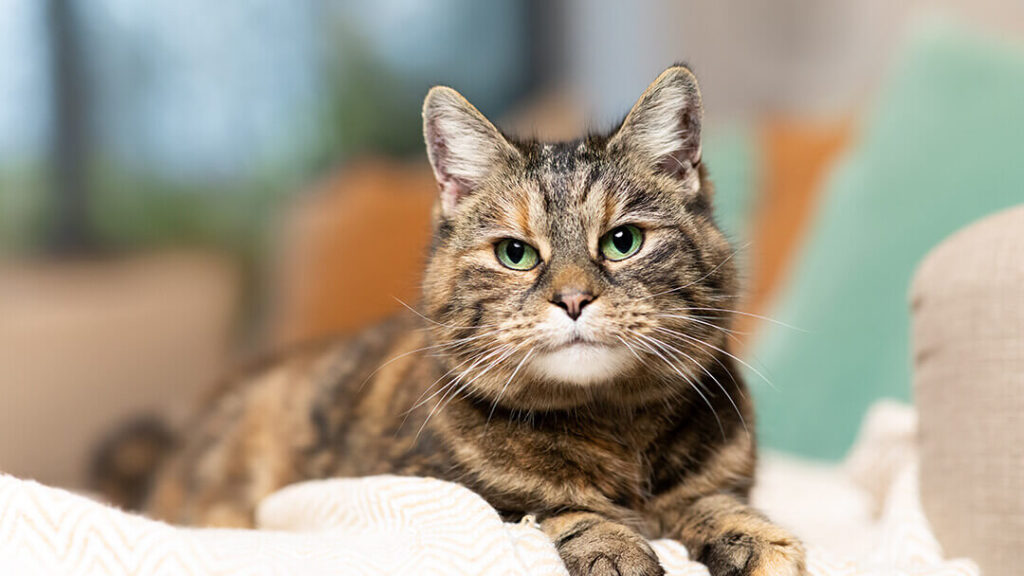
In the doorway stood the maid. She held a big tortoise /ˈtɔːr.t̬əs. / -shell cat pressed tight (押し付けられた) / against her and swung down (ぶらんと下がった) / against her body.
“Excuse me,” she said, “the padrone /pəˈdroʊ.neɪ/ (主人、ホテルの経営者) asked me to bring this / for the Signora (奥様) .”
英単語・英語表現の解説
(1)
- Stopping at
- /ˈsɑː.pɪŋ.æt/ : STOP-ping-at
- (ホテルなどに)滞在している : Staying temporarily at a place.
- 語源: stop(止まる)+ at(地点)。
- 解説: 根を下ろしていない一時的で浮遊感のある状態を暗示する熟語。
- 発音のコツ: ingの /ŋ/ と /æ/ を連結させ、「ストッピンギャット」のように繋げます。
- Passed
- /pæst/ : PASSED
- すれ違った、通り過ぎた : Moved past someone or something.
- 語源: ラテン語の「歩み(passus)」に由来。
- 解説: 他者との交流の欠如を暗示する描写。
- 発音のコツ: 語尾は軽い /t/ で鋭く短く発音します。
- Stairs
- /sterz/ : STAIRS
- 階段 : A set of steps leading between floors.
- 語源: 古英語の「登るための段(stæger)」に由来。
- 解説: 他者との交差点でありながら、孤独を際立たせる場所。
- 発音のコツ: /st/ から滑らかに繋ぎ、語末の /z/ を響かせます。
- On their way to
- /ɑːn.ðer.weɪ.tuː/ : on-their-WAY-to
- 〜へ行く途中で : While traveling to a destination.
- 語源: on(〜の上に)+ way(道)+ to(〜へ)。
- 解説: 場所を移動している時間経過を示す熟語。
- 発音のコツ: 各単語をなめらかに連結させ、「オン・ゼア・ウェイトゥ」と一息に発音します。
- Facing
- /ˈfeɪ.sɪŋ/ : FAC-ing
- 〜に面している : Positioned towards a direction.
- 語源: ラテン語の「顔(facies)」に由来。
- 解説: 部屋の視覚的な位置関係を示す重要動詞。
- 発音のコツ: 第1音節の二重母音 /eɪ/ を明瞭に発音します。
- Public garden
- /ˈpʌb.lɪk.ˈɡɑːr.dn/ : PUB-lic GAR-den
- 公共庭園 : A park open to the public.
- 語源: public(人民の)+ garden(囲い)。
- 解説: 孤独を際立たせる背景として機能する場所。
- 発音のコツ: gardenの /dn/ を鼻腔破裂(舌をつけたまま鼻から抜く)で発音します。
- War monument
- /ˈwɔːr.ˈmɑːn.jə.mənt/ : WAR MON-u-ment
- 戦争記念碑 : A structure honoring those who died in war.
- 語源: ラテン語の「思い出させるもの(monere)」に由来。
- 解説: 物語の時代背景を示す象徴。
- 発音のコツ: 第1音節を強め、末尾の /t/ は飲み込むようなストップTで発音します。
- Palms
- /pɑːmz/ : PALMS
- ヤシの木 : Tropical trees with a straight trunk.
- 語源: ラテン語の「手のひら(palma)」に由来。
- 解説: 暗い雨の質感を与える対象。
- 発音のコツ: 「l」は発音しない黙字(サイレントレター)です。
- Easel
- /ˈiː.zl/ : EA-sel
- 画架、イーゼル : A frame for an artist’s canvas.
- 語源: オランダ語の「ロバ(ezel)」に由来。
- 解説: 晴天時の活気と雨天時の対比。
- 発音のコツ: 末尾は舌先を歯茎につけたまま響かせるダークLで発音します。
- From a long way off
- /frəm.ə.lɔːŋ.weɪ.ɔːf/ : from-a-LONG-WAY-OFF
- 遠く離れた所から : From a great distance.
- 語源: from + long + way + off(副詞)。
- 解説: 物理的・心理的な隔たりを強調する熟語的副詞句。
- 発音のコツ: 各単語を連結して発音し、「フロマ・ロング・ウェイ・オフ」のように繋げます。
- Look up at
- /lʊk.ʌp.æt/ : LOOK-UP-AT
- 〜を見上げる : To direct one’s eyes towards something high.
- 語源: look + up + at。
- 解説: 記念碑の崇高さを身体動作として示す熟語。
- 発音のコツ: /k/ と /ʌ/ を連結させ、「ルッカッパット」のように発音します。
- Glistened
- /ˈɡlɪs.nd/ : GLIS-tened
- (濡れて)輝いた : Shone with light when wet.
- 語源: 古英語の「輝く(glisnian)」に由来。
- 解説: 光を反射する雨の情景。
- 発音のコツ: 「t」は発音しないため、「グリスンド」となります。
- Dripped
- /drɪpt/ : DRIPPED
- 滴った : Fell in small drops.
- 語源: 中英語の「滴る(dryppen)」に由来。
- 解説: 静かな雨の音を想起させる動詞。
- 発音のコツ: 語尾は無声音の /t/ で、短く鋭く発音します。
- Broke
- /broʊk/ : BROKE
- (波が)砕けた : Of a wave, to collapse or crash.
- 語源: 古英語の「壊す(brecan)」に由来。
- 解説: 波の反復を力学的に表現。
- 発音のコツ: 語末の /k/ は息を止めるストップ音にします。
- Slipped back
- /slɪpt.bæk/ : SLIPPED-BACK
- (波が)引き返した : Moved back smoothly.
- 語源: slip(滑る)+ back。
- 解説: 自然の反復運動。
- 発音のコツ: /pt/ の音の直後に、間を置かず /b/ へ移行します。
- Come up
- /ˈkʌm.ʌp/ : COME-UP
- (波が)押し寄せる : To move towards the shore.
- 語源: come + up。
- 解説: 波のサイクルの繋ぎとなる動作。
- 発音のコツ: /m/ と /ʌ/ を連結させ、「カマップ」のように発音します。
- Square
- /skwer/ : SQUARE
- 広場 : An open, four-sided area in a town.
- 語源: ラテン語の「正方形にする(exquadrare)」に由来。
- 解説: 人々が集う場所でありながら、今は空っぽであるという対比。
- 発音のコツ: /skw/ の子音連結を滑らかに発音します。
- Doorway
- /ˈdɔːr.weɪ/ : DOOR-way
- 出入り口、戸口 : The opening in a wall.
- 語源: door(門)+ way(道)。
- 解説: 内部と外部の中間地点で世界を観察する位置。
- 発音のコツ: /dɔːr/ の /r/ は軽く巻いて、母音の余韻を消します。
- Empty square
- /ˈemp.ti.skwer/ : EMP-ty SQUARE
- 空っぽの広場 : A deserted or unoccupied open town area.
- 語源: empty(古英語:空の)+ square(広場)。
- 解説: 物理的な広場の空虚さと、内面の満たされない欲求を象徴する複合表現。
- 発音のコツ: /mp/ の後に軽いTを入れ、squareの /skw/ を続けて一気に発音します。
(2)
- Crouched
- /kraʊtʃt/ : CROUCHED
- しゃがみ込んだ、うずくまった : To stoop or bend low with the limbs close to the body.
- 語源: 古フランス語の「曲げる(crochir)」に由来。
- 解説: 猫が雨を避けようと小さくなっている様子。雨に濡れるのを防ぐための防御的な姿勢を強調しています。
- 発音のコツ: 語尾の /ed/ は無声子音 /tʃ/ の直後なので、はっきりとした /t/ の音になります。
- Dripping
- /ˈdrɪp.ɪŋ/ : DRIP-ping
- 滴り落ちる : Falling in small drops of liquid.
- 語源: 中英語の「滴る(dryppen)」に由来。
- 解説: 雨の多さと、湿り気を帯びた環境の不快感を物理的に表す重要な形容詞です。
- 発音のコツ: /p/ の音が二重になるため、一度口を閉じてから再び開く動作が必要です。
- Going down and get
- /ˈɡoʊ.ɪŋ.daʊn.ən.ɡet/ : GO-ing DOWN and GET
- 下へ行って〜を連れてくる : To go to a lower level and retrieve something.
- 語源: go + down + and + get。
- 解説: 階上の部屋から、猫のいる地面へ移動するという空間的な変化を示す熟語的表現。
- 発音のコツ: 各単語を連結し「ゴーインダウナゲッ」と流れるように発音します。
- Kitty
- /ˈkɪt.i/ : KIT-ty
- 子猫(愛称) : A small or young cat.
- 語源: kit(子猫)の愛称形。
- 解説: 妻が猫に対して抱いている親密な感情や、保護したいという欲求を反映しています。
- 発音のコツ: 中間の /t/ はフラップTとなり、軽やかな「ラ行」の音で発音します。
- Offered
- /ˈɒf.ərd/ : OF-fered
- (〜しようと)申し出た : To express a willingness to do something.
- 語源: ラテン語の「差し出す(offerre)」に由来。
- 解説: 夫の受動的な関わり方を象徴する動詞。妻の熱意と対照的に、ベッドから動こうとしない彼の態度が示されています。
- 発音のコツ: /f/ の音をしっかりと摩擦させ、/ər/ で軽く終わります。
- Poor
- /pʊr/ : POOR
- かわいそうな : Deserving of pity or sympathy.
- 語源: ラテン語の「貧しい(pauper)」に由来。
- 解説: 猫に対する同情心。妻が猫に自分を投影し、現状への不満や孤独感を解消しようとしていることが読み取れます。
- 発音のコツ: /ʊ/ から /r/ へ、唇を丸めてから引きながら発音します。
- Keep dry
- /ˈkiːp.draɪ/ : KEEP DRY
- 濡れないようにしておく : To remain in a state not covered in water.
- 語源: keep(保つ)+ dry(乾いた)。
- 解説: 雨から身を守ろうとする猫の生存本能と、妻の保護衝動が重なる表現です。
- 発音のコツ: /p/ の音をしっかり止め、直後の /d/ と繋げます。
- Went on reading
- /went.ɒn.ˈriːd.ɪŋ/ : WENT ON READ-ing
- 読み続けた : To continue with an activity without stopping.
- 語源: goの過去形 + on(継続)+ read(読む)。
- 解説: 妻が猫を助けに行こうとする中で、夫が読書を中断しない様子を強調する熟語。夫婦の意識の断絶を表現しています。
- 発音のコツ: 各単語を連結させ、「ウェントゥオンリーディング」のようなリズムになります。
- Lying propped up
- /ˈlaɪ.ɪŋ.prɒpt.ʌp/ : LY-ing PROPPED UP
- 支えられて寝そべっている : Resting in a reclining position with support.
- 語源: lie(横たわる)+ prop(支える)+ up(上に)。
- 解説: 夫の寝室での怠惰な、しかし優雅な姿勢。物理的に高い位置(ベッドの頭側)にいることで、彼が状況を支配しているかのような心理的な距離感が描かれています。
- 発音のコツ: /pt/ と /ʌ/ の連続を滑らかに処理します。
- Pillows
- /ˈpɪl.oʊz/ : PIL-lows
- 枕 : A rectangular cloth bag stuffed with soft material.
- 語源: ラテン語の「クッション(pulvinus)」に由来。
- 解説: 夫が読書をするために積み重ねたアイテム。快適さを確保するための小道具として登場します。
- 発音のコツ: 語末の /z/ を濁らせ、軽く響かせます。
(3)
- Went downstairs
- /went.ˈdaʊn.sterz/ : went-DOWN-STAIRS
- 階下へ降りた : To move from a higher floor to a lower one.
- 語源: goの過去形 + down(下へ)+ stairs(階段)。
- 解説: 部屋という閉鎖空間から、ホテルの公共スペースへ移動する動作。妻の心理적変化や、新しい出会いへの準備を暗示しています。
- 発音のコツ: wentの /t/ はリダクションにより弱まり、/d/ と連結して「ウェンダウンステアズ」のように聞こえます。
- Hotel owner
- /hoʊˈtel.ˈoʊ.nər/ : ho-TEL OW-ner
- ホテルの主人 : A person who possesses or manages a hotel.
- 語源: hotel(滞在所)+ owner(所有者)。
- 解説: 夫とは対照的に、妻を敬意を持って扱う人物。物語における対立軸(夫の無関心 vs 主人の礼節)を形成する重要な役割です。
- 発音のコツ: hotelの /l/ はダークLとして響かせ、ownerの /w/ を繋げます。
- Bowed to
- /baʊd.tuː/ : BOWED-TO
- 〜にお辞儀をした : To bend the body forward as a sign of respect.
- 語源: 古英語の「屈する(bugan)」に由来。
- 解説: 主人の礼儀正しさを象徴する動作。妻に対する彼なりの敬意の示し方です。
- 発音のコツ: 語尾の /d/ と to の /t/ が連続するため、口の中で閉鎖音を維持してリズムを作ります。
- Far end
- /ˈfɑːr.end/ : FAR-END
- (広間の)一番奥 : The most distant part of a room or area.
- 語源: far(遠い)+ end(端)。
- 解説: 主人の立ち位置を強調。妻から物理的に距離があることで、主人に対する憧れや距離感が示されています。
- 発音のコツ: farの /r/ を軽く巻き、endの母音へスライドさせます。
- Hotel-keeper
- /ˈhoʊ.tel.kiː.pər/ : ho-TEL-KEEP-er
- ホテルの主人、経営者 : Someone whose job is to run a hotel.
- 語源: hotel + keep(管理する)。
- 解説: 「owner」と似ていますが、ここでは職業人としての「役割」に焦点を当てています。妻は彼の職業意識そのものに魅力を感じています。
- 発音のコツ: /k/ と /k/ が連続する場合、二つの音を一つに統合し「ホテルキーパー」と発音します。
- Brutto tempo
- /ˈbruːt.toʊ.ˈtem.poʊ/ : BRUT-to TEM-po
- ひどい天気(イタリア語) : Bad weather.
- 語源: イタリア語の「brutto(悪い)」+「tempo(天気)」。
- 解説: 外国の土地であることの強調。夫婦の置かれた状況の「異質さ」と「閉塞感」を、直接的なイタリア語で表現しています。
- 発音のコツ: 二重子音 /tt/ は一瞬息を止める感覚で、歯切れよく発音します。
- Dim
- /dɪm/ : DIM
- 薄暗い : Not bright or clear.
- 語源: 古英語の「暗い(dim)」に由来。
- 解説: ホテルの部屋の雰囲気。妻の心理状態(モヤモヤした感覚)や、雨の日の閉鎖的な空気を象徴しています。
- 発音のコツ: /m/ の響きを鼻から長く抜きます。
- Deadly serious
- /ˈded.li.ˈsɪr.i.əs/ : DEAD-ly SE-ri-ous
- 極めて真剣な : Extremely serious.
- 語源: deadly(致命的なほど)+ serious(真剣な)。
- 解説: 主人がいかなる些細な苦情にも全力で応える態度。妻が彼に魅力を感じる最大の要因であり、夫の「真剣味の欠如」との対比です。
- 発音のコツ: deadlyの /d/ と seriousの /s/ をはっきりと区別し、リズムを強めます。
- Dignity
- /ˈdɪɡ.nə.t̬i/ : DIG-ni-ty
- 威厳、品位 : A sense of self-respect or seriousness.
- 語源: ラテン語の「価値ある(dignus)」に由来。
- 解説: ホテル主人という職業に対する誇り。妻にとってそれは、夫に欠けている「自己の確立」の象徴と映っています。
- 発音のコツ: 第2音節の /n/ と /t/ を繋ぎ、「ディグニティ」と流暢に発音します。
- Big hands
- /ˈbɪɡ.hændz/ : BIG-HANDS
- 大きな手 : Physically large hands.
- 語源: big(大きい)+ hands(手)。
- 解説: 主人の身体的特徴への注目。妻は彼の「生身の人間性」や「生活者のたくましさ」に惹かれています。
- 発音のコツ: bigの /g/ は破裂させず、次の /h/ と喉の奥で繋げます。
(4)
- Liking him
- /ˈlaɪ.kɪŋ.hɪm/ : LIK-ing HIM
- 彼(主人)を気に入ったので : Feeling affection or admiration for him.
- 語源: like(好む)+ him(彼)。
- 解説: 主人への好意が、妻を再び雨の中へ向かわせる動機になっています。夫の部屋から外へ出るという、彼女の心理的な解放のプロセスを示しています。
- 発音のコツ: 「h」が脱落し、「ライキンイム」のように繋がります。
- A rubber cape
- /ə.ˈrʌb.ər.keɪp/ : a RUB-ber CAPE
- ゴム製のレインコート : A waterproof garment made of rubber.
- 語源: rubber(ゴム)+ cape(外套)。
- 解説: 雨の日の風景に登場する人物の装い。雨という閉鎖적状況をより鮮明にする小道具です。
- 発音のコツ: rubberの /r/ を巻き、capeの /k/ で止めます。
- Around to the right
- /əˈraʊnd.tu.ðə.raɪt/ : a-ROUND to the RIGHT
- 右手の方向へ、右側の周りへ : In the direction of the right side, moving around a position.
- 語源: around(〜の周囲に)+ to(〜の方へ)+ right(右)。
- 解説: 猫の居場所を探して視線や身体を右方向に転換する動作. 特定の目印(角)を想定するのではなく、広場における「右側」という大まかな方向性を示しています。
- 発音のコツ: 各単語を連結し、リズムよく「アラウンドゥザライト」と発音。
- Eaves
- /iːvz/ : EAVES
- ひさし、軒下 : The part of a roof that meets or overhangs the walls of a building.
- 語源: 古英語の「軒(efes)」。
- 解説: 雨を避けるために妻が移動しようとする場所。ホテルの境界線という、彼女の冒険の範囲を象徴します。
- 発音のコツ: /v/ の音をしっかり摩擦させ、/z/ で終わります。
- Umbrella
- /ʌmˈbrel.ə/ : um-BREL-la
- 傘 : A device used for protection against rain.
- 語源: ラテン語の「日陰(umbra)」に由来。
- 解説: ホテル主人の気遣いが形となったもの。妻の探求を制限するものでありながら、彼女を守る「保護」のメタファーでもあります。
- 発音のコツ: 第2音節にアクセント。/r/ を巻きながら発音します。
- Looked after
- /lʊkt.ˈæf.tər/ : LOOKED AF-ter
- 〜の世話をする : To be responsible for someone or something.
- 語源: look(見る)+ after(〜の後を追って)。
- 解説: メイドの役割。夫婦の生活に関わる存在であり、主人の指示を忠実に守る彼女の性格を暗示しています。
- 発音のコツ: looked の /t/ と after の /æ/ を繋いで「ルックタフター」と発音します。
- Sent
- /sent/ : SENT
- よこした : Caused to go.
- 語源: send(送る)の過去形。
- 解説: ホテル主人が妻を気遣い、メイドを派遣した行為。主人のプロフェッショナルな献身を物語っています。
- 発音のコツ: 語末 /nt/ をはっきりと発音します。
- Washed bright green
- /wɒʃt.braɪt.ɡriːn/ : WASHED BRIGHT GREEN
- 雨に洗われて鮮やかな緑色になった : Cleaned and made vibrant by rain.
- 語源: wash(洗う)+ bright(鮮やかな)+ green(緑)。
- 解説: 雨がもたらす視覚的な変化. 猫の隠れ家であったテーブルが、雨によってより美しく、際立って見えることを指します。
- 発音のコツ: 各単語の繋ぎで息を止めず、流れるように読みます。
- Disappointed
- /ˌdɪs.əˈpɔɪn.tɪd/ : dis-ap-POINT-ed
- がっかりした : Feeling sad because something expected did not happen.
- 語源: ラテン語の「点(point)から外れる」に由来。
- 解説: 猫がいなくなったことで、妻の小さな期待が裏切られた瞬間。この落胆は、彼女の抱える慢性的な虚無感を強調しています。
- 発音のコツ: /p/ の破裂音と /t/ のストップ音を交互に意識します。
(5)
- American girl
- /əˈmer.ɪ.kən.ɡɜːrl/ : ə-MER-i-kən GIRL
- アメリカ人の女性 : A female person from the United States.
- 語源: 探検家アメリゴ・ヴェスプッチに由来。
- 解説: これまで「wife」と呼ばれていた彼女が、メイドとのやり取りの中では「girl」と表現されています。彼女の未熟さや、他者から見た「守られるべき若さ」が強調されています。
- 発音のコツ: Americanの /k/ と girl の繋がりを滑らかに、喉の奥で音を繋げるように意識します。
- Laughed
- /læft/ : LAUGHED
- 笑った : To make sounds expressing amusement.
- 語源: 古英語の「笑う(hlehhan)」に由来。
- 解説: 妻の執着に対するメイドの反応。雨の中に猫を求める妻の行動が、現地の人間には理解しがたい、ある種の「無邪気な不可解さ」として映っていることを示します。
- 発音のコツ: 語尾は /ft/ であり、前歯で下唇を軽く噛んでから強く息を吐き出す音です。
- Tightened
- /ˈtaɪ.tənd/ : TIGHT-ened
- 引き締まった、硬くなった : To become less relaxed or more serious in expression.
- 語源: tight(固い)+ -ened(〜になる)。
- 解説: 妻が英語を話した瞬間のメイドの表情の変化。母国語(イタリア語)ではない言語が使われることで、二人の間に生じた「距離」や「壁」を物理的な表情の変化として描写しています。
- 発音のコツ: 「t」はストップ音として飲み込み、そのまま鼻から抜くように /nd/ へ繋げます。
- Must get back
- /mʌst.ɡet.bæk/ : MUST GET BACK
- 戻らなければならない : To return to a previous place.
- 語源: must(〜しなければならない)+ get(行く)+ back(戻る)。
- 解説: メイドの管理者的立場を示す強制力のある指示。妻の願いを遮断し、安全な場所(室内)へ誘導する役割を果たします。
- 発音のコツ: /st/ と /g/ が続くため、/t/ を飲み込むようにしてリズムを崩さず一気に発音します。
- I suppose so
- /aɪ.səˈpoʊz.soʊ/ : I sup-POSE SO
- そうですね、たぶんそうでしょう : To accept something reluctantly or with little conviction.
- 語源: suppose(考える、仮定する)+ so(そのように)。
- 解説: 妻の諦念を表す重要な言い回し。自分の意志がメイド(さらには背後の夫)の論理によって覆されたことを受け入れる、彼女の受動的な姿勢が表現されています。
- 発音のコツ: soの二重母音を丁寧に響かせ、投げやりな雰囲気を出すように余韻を残します。
(6)
- Gravel path
- /ˈɡræv.əl.pæθ/ : GRAV-el PATH
- 砂利道 : A path covered with small stones.
- 語源: gravel(フランス語の「砂粒」)+ path(小道)。
- 解説: 足元の不安定さを象徴。雨に濡れた砂利は歩きにくく、妻の心中にある迷いや葛藤を物理的な感覚として伝えています。
- 発音のコツ: gravelの /l/ はダークLとして響かせ、pathの /θ/ をしっかりと発音します。
- Padrone
- /pəˈdroʊ.neɪ/ : pa-DRO-ne
- 主人、店主(イタリア語) : The master or proprietor of a hotel or business.
- 語源: イタリア語の「主人(padrone)」。
- 解説: 「hotel-keeper」をあえてイタリア語の「padrone」と呼ぶことで、ホテルの主人が持つ特有の威厳と、妻にとっての異国情緒的な魅力が強調されています。
- 発音のコツ: 末尾の /eɪ/ を明瞭に発音します。
- Small and tight
- /ˈsmɔːl.ənd.taɪt/ : SMALL and TIGHT
- 小さく、張り詰めた : Feeling constricted or anxious.
- 語源: small(小さい)+ tight(固い)。
- 解説: 主人から敬意を払われたことで、かえって自分の内面の空虚さや窮屈さが際立っている心理状態。満たされない承認欲求がこの言葉に凝縮されています。
- 発音のコツ: andの /nd/ はリダクションし、small-a-tight のようなリズムになります。
- Supreme importance
- /səˈpriːm.ɪmˈpɔːr.təns/ : su-PREME im-POR-tance
- この上なく重要なこと : The highest level of significance.
- 語源: supreme(最高の)+ importance(重要性)。
- 解説: 妻が感じた一時的な「特別感」。自分を一個人として尊重してくれる主人の前で、彼女は「自分が存在している」という実感を一瞬だけ取り戻しています。
- 発音のコツ: supreme の /m/ を次の母音と繋ぎ、「スプリーミムポータンス」のように発音します。
- Putting the book down
- /ˈpʊt.ɪŋ.ðə.bʊk.daʊn/ : PUT-ting the BOOK DOWN
- 本を置く : To cease reading by placing the book aside.
- 語源: put(置く)+ down(下へ)。
- 解説: 夫の無関心さを示す動作。会話をしながらも本を置くという行為に、彼の心の中にある読書への優先度と、妻の感情に対する距離感が表れています。
- 発音のコツ: put-ting の /t/ はフラップTで「ラ行」に近い音になります。
- Any fun
- /ˈen.i.fʌn/ : AN-y FUN
- 楽しいこと : Enjoyable or amusing.
- 語源: any(どんな〜も)+ fun(楽しみ)。
- 解説: 「It isn’t any fun to be…」の形で、妻が猫の孤独に自分の現状を重ね合わせている核心部分。彼女の言葉は、実は自分の境遇に対する独白に近いものです。
- 発音のコツ: /f/ の音をしっかりと摩擦させて発音します。
(7)
- Dressing table
- /ˈdres.ɪŋ.ˌteɪ.bl/ : DRESS-ing TA-ble
- 鏡台、化粧台 : A table with a mirror and drawers, used while applying makeup or doing one’s hair.
- 語源: dress(準備する、整える)+ table。
- 解説: 身なりを整えるための専用の家具。ここでは、自分の外見を再確認する場所としての象徴的な役割を果たしています。
- 発音のコツ: /dr/ の音を繋げ、table の /l/ は舌先を付けたまま喉の奥で鳴らすダークLにする。
- Hand glass
- /hænd.ɡlæs/ : HAND GLASS
- 手鏡 : A small mirror with a handle.
- 語源: hand(手)+ glass(鏡、ガラス)。
- 解説: 鏡台の大きな鏡では見えない後頭部などの細部を確認するための小道具。
- 発音のコツ: /d/ はほとんど発音せず、そのまま /ɡ/ に繋げて「ハングレス」のように発音する。
- Studied
- /ˈstʌd.id/ : STUD-ied
- 入念に見た、調べた : Looked at something very carefully.
- 語源: ラテン語 studere(熱心に取り組む)に由来.
- 解説: 単に眺めるのではなく、細かなラインや変化を厳しくチェックするという強いニュアンス。
- 発音のコツ: 語末の /d/ を短く弾くように発音し、余韻を残さない。
- Profile
- /ˈproʊ.faɪl/ : PRO-file
- 横顔 : An outline of something, especially a person’s face, as seen from one side.
- 語源: イタリア語 profilare(線を引く)に由来。
- 解説: 自分の女性らしさや少年のような髪型のバランスを、客観的に評価しようとする妻の心理を映す語。
- 発音のコツ: 第1音節にアクセントを置き、/oʊ/ をしっかり二重母音として口を動かす。
- Grow out
- /ɡroʊ.aʊt/ : GROW-OUT
- (切った髪などを)伸ばす : To allow one’s hair to get longer.
- 語源: grow(成長する)+ out(外へ)。
- 解説: 髪を切らずに元の長さに戻すこと。現状の自分を変えたいという変身願望の表れ。
- 発音のコツ: grow の語末 /w/ と out の語頭 /a/ を連結させて「グロウワウト」と発音。
- Clipped close
- /klɪpt.kloʊs/ : CLIPPED CLOSE
- 短く刈り込まれた : Cut very short, near to the skin.
- 語源: clip(刈る)+ close(近くに)。
- 解説: 少年のように短くカットされた状態。当時のモダンスタイルでありつつ、彼女が不満を抱く原因の一つ。
- 発音のコツ: /pt/ と /k/ が連続するため、/t/ は舌を付けたまま息を止めるストップTにする。
- The way it is
- /ðə.weɪ.ɪt.ɪz/ : the WAY it IS
- 今のままの状態 : The current state or condition.
- 語源: way(状態)+ it is。
- 解説: 現状維持。妻の葛藤に対し、ジョージが変化を求めていない(あるいは無関心である)ことを示すフレーズ。
- 発音のコツ: way の /ɪ/ と it の /ɪ/ を滑らかに連結させ、最後の /z/ をしっかり濁らせる。
- Get tired of
- /ɡet.ˈtaɪ.ərd.əv/ : get TIRED of
- ~に飽きる、~が嫌になる : To become bored with or impatient with something.
- 語源: tired(疲れた)+ of。
- 解説: 精神的な限界。これまでの自分や環境に対する決別を暗示する強い表現。
- 発音のコツ: /d/ と /əv/ を繋げて「タイアダヴ」のように発音し、リズムを一定に。
- Shifted his position
- /ˈʃɪf.t̬əd.hɪz.pə.ˈzɪʃ.n/ : SHIFT-ed his po-SI-tion
- 体の向きを変えた : Moved one’s body into a different stance or place.
- 語源: shift(移る)+ position(位置)。
- 解説: 妻の言葉に反応して動いた、ジョージのわずかな態度の変化。
- 発音のコツ: /t/ をフラップT(/t̬/)化し、his の /h/ を落として「シフティディズ」と繋げる。
- Pretty darn nice
- /ˈprɪt̬.i.dɑːrn.naɪs/ : PRET-ty DARN NICE
- すごく素敵だ、かなりいい : Very pleasant or attractive (informal).
- 語源: darn(強調の遠回し語)。
- 解説: 夫なりの褒め言葉だが、真剣に向き合っているとは言い難い、日常的で軽い響きを持つ。
- 発音のコツ: pretty の /tt/ をフラップT(/t̬/)にして「プリディ」に近い音で発音。
(8)
- Pull back
- /pʊl.bæk/ : PULL BACK
- (髪などを)後ろに束ねる、引き下げる : To move something back or away from a particular place.
- 語源: pull(引く)+ back(後ろへ)。
- 解説: 短い髪を無理にでもまとめようとする動作。現在の自分を否定し、女性的な外見への回帰を願う強い意志が込められています。
- 発音のコツ: /l/ はダークLで、舌先を上の歯茎に付けたまま喉の奥で響かせる。
- Smooth
- /smuːð/ : SMOOTH
- 滑らかな、整った : Having an even and regular surface or appearance.
- 語源: 古英語の「穏やかな、平らな」に由来。
- 解説: 乱れのない、端正な外見を求める言葉。内面の混乱とは対照的な「美しさ」への渇望。
- 発音のコツ: /ð/ は有声の歯間摩擦音。舌先を軽く噛み、喉を震わせて長く響かせる。
- Knot
- /nɑːt/ : KNOT
- 結び目、(髪の)お団子 : A fastening made by tying a piece of string, rope, or hair.
- 語源: 古英語の「膨らみ」に由来。
- 解説: 髪をまとめて作る塊。ここでは伝統的な女性らしい髪型を指し、自分の手でその存在を「感じたい(feel)」という感覚的な欲求が伴っています。
- 発音のコツ: /k/ は発音しない(サイレントK)。/t/ はストップTで短く止める。
- Purr
- /pɜːr/ : PURR
- (猫が)喉をゴロゴロ鳴らす : A low continuous vibratory sound made by a cat.
- 語源: 音を真似た擬音語(オノマトペ)。
- 解説: 安心や満足の象徴。彼女が求めているのは、単なる動物としての猫ではなく、自分を無条件に肯定し、癒やしてくれる存在の反応。
- 発音のコツ: /ɜːr/ を長めに響かせ、喉の奥から振動させるように発音。
- Stroke
- /stroʊk/ : STROKE
- なでる : To move one’s hand gently over a surface, typically hair or fur.
- 語源: 古英語の「叩く、動かす」に由来。
- 解説: 愛着を示す身体的接触。彼女の孤独と、誰か(あるいは何か)を慈しみたいという母性的な欲求が表れています。
- 発音のコツ: /str/ の子音結合を素早く。/oʊ/ をしっかり二重母音として口を動かす。
- Silver
- /ˈsɪl.vər/ : SIL-ver
- 銀食器 : Knives, forks, and spoons made of silver or a similar metal.
- 語源: 古英語の「銀」に由来。
- 解説: 定住生活や家庭的な豊かさを象徴する語。ホテル暮らしの仮初めの生活に対する不満と、自分の「所有物(own)」への強いこだわり。
- 発音のコツ: /v/ をしっかり噛み、最後の /ər/ で R を響かせる。
- Brush out
- /brʌʃ.aʊt/ : BRUSH-OUT
- (髪を)ブラッシングする、解きほぐす : To smooth or clean hair using a brush.
- 語源: brush(ブラシ)+ out(広げて)。
- 解説: 入念に髪を整える動作。鏡の前で行うこの儀式的な行為は、彼女にとっての「自分らしさ」を取り戻すプロセスです。
- 発音のコツ: /ʃ/ の摩擦音と /a/ を繋げて「ブラシャウト」のように発音。
- Shut up
- /ʃʌt.ˈʌp/ : SHUT-UP
- 黙れ : To stop talking immediately (often rude).
- 語源: shut(閉じる)+ up(完全に)。
- 解説: 妻の切実な訴えを拒絶する、ジョージの非常に冷淡で粗野な反応。夫婦間の圧倒的なコミュニケーション不全。
- 発音のコツ: /t/ をフラップT(/t̬/)化して後ろと繋げ、「シャタップ」のように発音。
- Anyway
- /ˈen.i.weɪ/ : EN-y-way
- とにかく、いずれにせよ : Used to end a conversation or to change the subject back to a primary point.
- 語源: any(どんな)+ way(方法)。
- 解説: 夫の拒絶に対抗し、自分の要求を再主張するための転換語。論理ではなく、感情的な執着を正当化するために使われています。
- 発音のコツ: 第1音節にアクセントを置き、/weɪ/ を滑らかに響かせる。
- If I can’t have
- /ɪf.aɪ.kænt.hæv/ : if-I-CAN’T-have
- もし〜が手に入らないなら : A conditional phrase expressing a trade-off or alternative desire.
- 語源: if(もし)+ cannot + have(持つ)。
- 解説: 妥協と諦めが混じった、切迫した条件提示。多くの望みが叶わない現状において、せめて猫だけは譲れないという最終的な防衛線。
- 発音のコツ: can’t の /t/ は飲み込むストップT。have の /v/ をしっかり発音。
(9)
- Was not listening
- /wɑːz.nɑːt.ˈlɪs.n.ɪŋ/ : was-not-LIS-ten-ing
- 聞いていなかった : Not paying attention to what someone is saying.
- 語源: listen(注意して聞く)は古英語の hlysnan に由来。
- 解説: 妻の切実な訴えに対するジョージの完全な無関心。物理的に聞こえていないのではなく、心理的な拒絶と没入を意味します。
- 発音のコツ: listen の /t/ はサイレント。/n/ から /ɪŋ/ へ鼻音を繋げる。
- Come on
- /kʌm.ɑːn/ : COME ON
- (明かりなどが)つく、灯る : To start functioning or to be switched on.
- 語源: come(来る)+ on(接触、活動中)。
- 解説: 広場の街灯が灯った様子。外が完全に暗くなった時間経過と、物語が結末へ向かう視覚的な合図です。
- 発音のコツ: /m/ と /ɑːn/ を連結させ「カマーン」のように発音。
- Avanti
- /əˈvɑːn.ti/ : A-VAN-ti
- イタリア語で「お入りなさい」「前へ」 : An Italian word meaning “come in” or “forward.”
- 語源: ラテン語の abante(前から)に由来。
- 解説: ジョージがノックに対して発した言葉。イタリア語を話すことで、彼もまたこの非日常的な異郷のシステムの一部であることを示唆。
- 発音のコツ: /v/ をしっかり噛み、最後の /i/ を短く明瞭に。
- Doorway
- /ˈdɔːr.weɪ/ : DOOR-way
- 戸口、出入り口 : An entrance to a building or room through a door.
- 語源: door(扉)+ way(道)。
- 解説: 部屋の内部(プライベート)と外部(ホテル・パドローネの支配下)の境界線。
- 発音 theコツ: /r/ を響かせた直後に /w/ へ滑らかに移行。
- Tortoise-shell cat
- /ˈtɔːr.t̬əs.ʃel.kæt/ : TOR-toise-shell CAT
- べっ甲色の猫、三毛猫 : A cat with a coat that has patches of different colors, typically black, orange, and cream.
- 語源: tortoise(亀)+ shell(殻)。その模様が亀の甲羅に似ていることから。
- 解説: 最後に現れた猫の具体的な描写。妻が外で見かけた猫と同じかどうかは明示されず、パドローネの「配慮」の結果として登場。
- 発音のコツ: tortoise の /t/ をフラップT(/t̬/)化し、shell の /l/ はダークLで締める。
- Pressed tight
- /prest.taɪt/ : PRESSED TIGHT
- ぎゅっと押し付けられた、密着した : Held firmly and closely against something.
- 語源: press(押す)+ tight(固く)。
- 解説: 猫が逃げないように、あるいはメイドが義務を遂行するためにしっかりと抱えられている様子。
- 発音のコツ: /st/ と /t/ が重なるため、最初の /t/ を飲み込むように発音。
- Swung down
- /swʌŋ.daʊn/ : SWUNG-DOWN
- ぶらんと下がった : Hanging or moving loosely downward.
- 語源: swing(揺れる)の過去分詞。
- 解説: 猫の体がメイドの腕の中で重力に従って垂れ下がっている様子。猫の重みと存在感を強調。
- 発音のコツ: /ŋ/ の鼻音をしっかり響かせ、/d/ へ繋げる。
- Padrone
- /pəˈdroʊ.neɪ/ : pa-DRO-ne
- イタリア語で「主人」「ホテルの経営者」 : A master or owner, especially of a hotel or inn in Italy.
- 語源: ラテン語の patronus(保護者)に由来。
- 解説: 妻が好意を抱いていたホテル経営者。彼女の「猫が欲しい」という願いを(それがどの猫であれ)叶えた、絶対的な権力と配慮を持つ存在。
- 発音のコツ: 第2音節の /oʊ/ にアクセントを置き、語末を軽く。
- Bring this
- /brɪŋ.ðɪs/ : BRING-this
- これを届ける : To carry or accompany something to a place.
- 語源: bring(持ってくる)。
- 解説: メイドが猫を「生き物」としてよりも、パドローネからの「届け物(指示)」として扱っているニュアンスが含まれます。
- 発音のコツ: /ŋ/ と /ð/ の繋ぎに注意し、舌を素早く歯の間に挟む。
- For the Signora
- /fɔːr.ðə.siˈnjɔː.rə/ : for-the-Sig-NO-ra
- 奥様のために、奥様へ : Intended for the lady (Italian title).
- 語源: signora はラテン語 senior(年上の)に由来。
- 解説: 物語を締めくくる一言。パドローネのサービスが、妻の空虚な心を一時的に満たしたのか、あるいはさらなる孤独を際立たせたのか、余韻を残します。
- 発音のコツ: Signora のアクセント位置(/njɔː/)を強調する。